Word Explanation
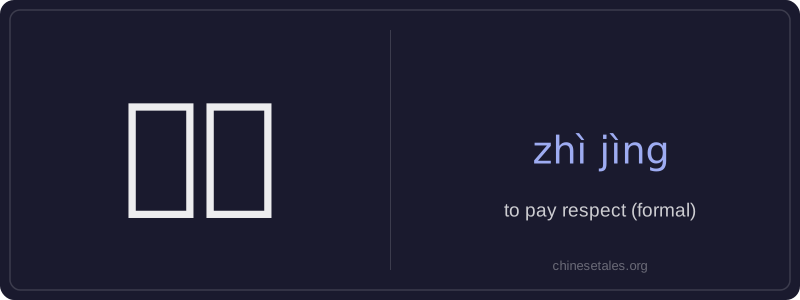
致敬 (zhì jìng) is a formal verb meaning 'to pay respect' or 'to express deep admiration and reverence.' The character 致 means 'to deliver,' 'to present,' or 'to direct toward,' while 敬 means 'respect,' 'reverence,' or 'deference.' Together, they convey the idea of deliberately offering respect—like presenting honor to someone or something worthy. It's commonly used in written contexts, speeches, ceremonies, and solemn occasions, such as commemorating heroes, honoring teachers, or acknowledging contributions.
This expression carries strong emotional weight and dignity. It’s rarely used in casual daily conversation; instead, it appears in official statements, memorial inscriptions, news headlines, graduation speeches, or social media posts marking national holidays or tributes to public figures. Unlike more general words like 尊重 (zūnzhòng), 致敬 implies active, intentional, and often public acknowledgment—not just an internal attitude but an outward gesture of homage.
Example Sentences
Related Words
国语
‘Guó yǔ’ literally means 'national language'—
无论谁
‘无论谁’ (wú lùn shéi) is a pronoun meaning
外语
‘外语’ literally means ‘outside language’ —
面条
‘面条’ (miàn tiáo) literally means ‘flour str
认同
‘认同’ (tóng rèn) is a verb meaning ‘to ident
违规
违规 (wéi guī) literally means 'to violate rules
亲笔
‘亲笔’ literally means ‘one’s own hand’—comb
不对
不对 (bù duì) literally combines 不 (bù), meani