Word Explanation
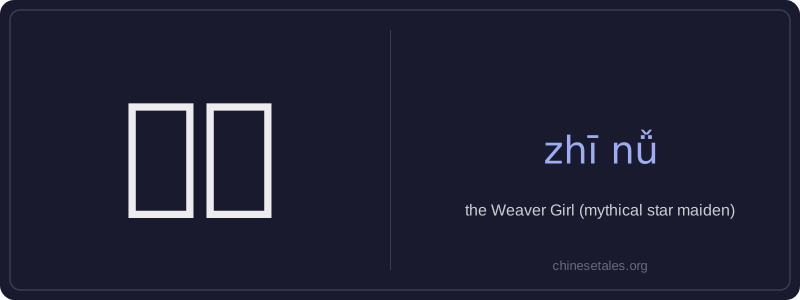
‘织女’ (Zhīnǚ) literally means ‘weaving girl’ — ‘织’ (zhī) means ‘to weave’, and ‘女’ (nǚ) means ‘girl’ or ‘woman’. In Chinese mythology, she is a celestial maiden and the goddess of weaving, daughter of the Jade Emperor, who lives in the heavens and weaves clouds and rainbows with her loom. She is best known for the romantic legend of the Cowherd and the Weaver Girl (Niúláng Zhīnǚ), one of China’s Four Great Folktales, symbolizing enduring love across separation.
The term appears frequently in literature, poetry, opera, and festivals — especially during the Qixi Festival (Chinese Valentine’s Day), when people celebrate her annual reunion with her mortal lover across the Milky Way. While ‘织女’ refers specifically to this mythological figure, it is rarely used in modern daily speech outside cultural or literary contexts. It carries poetic, classical, and nostalgic connotations, often evoking themes of fate, longing, and cosmic harmony.
Example Sentences
Related Words
国语
‘Guó yǔ’ literally means 'national language'—
无论谁
‘无论谁’ (wú lùn shéi) is a pronoun meaning
外语
‘外语’ literally means ‘outside language’ —
面条
‘面条’ (miàn tiáo) literally means ‘flour str
认同
‘认同’ (tóng rèn) is a verb meaning ‘to ident
违规
违规 (wéi guī) literally means 'to violate rules
亲笔
‘亲笔’ literally means ‘one’s own hand’—comb
不对
不对 (bù duì) literally combines 不 (bù), meani