Word Explanation
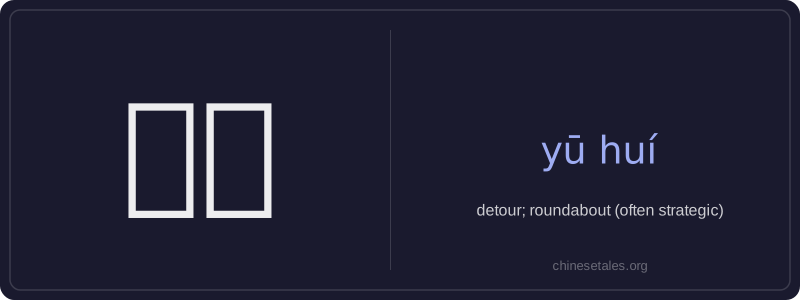
迂回 (yū huí) literally combines 迂 (yū), meaning 'circuitous' or 'indirect', and 回 (huí), meaning 'to turn back' or 'to circle'. Together, they describe a path or method that avoids a direct route—physically, like a winding mountain road, or figuratively, like a diplomatic strategy that sidesteps confrontation. It carries a neutral-to-positive connotation, often implying wisdom, patience, or tactical flexibility rather than inefficiency.
This word is commonly used in geography (e.g., describing roads or rivers), military or political discourse (e.g., indirect negotiation tactics), and everyday speech when referring to roundabout ways of achieving a goal—such as taking a longer bus route to avoid traffic or approaching a sensitive topic gently. While it can function as a noun ('a detour') or adjective ('a roundabout approach'), it rarely appears alone without context and often pairs with words like 路 (lù, 'road'), 策略 (cèlüè, 'strategy'), or 方式 (fāngshì, 'method').
Example Sentences
Related Words
国语
‘Guó yǔ’ literally means 'national language'—
无论谁
‘无论谁’ (wú lùn shéi) is a pronoun meaning
外语
‘外语’ literally means ‘outside language’ —
面条
‘面条’ (miàn tiáo) literally means ‘flour str
认同
‘认同’ (tóng rèn) is a verb meaning ‘to ident
违规
违规 (wéi guī) literally means 'to violate rules
亲笔
‘亲笔’ literally means ‘one’s own hand’—comb
不对
不对 (bù duì) literally combines 不 (bù), meani