Word Explanation
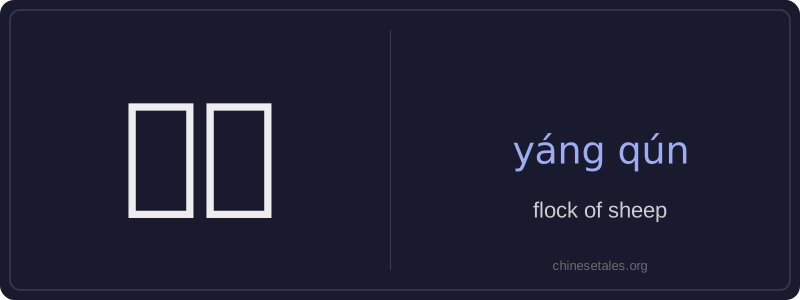
羊群 is a compound noun meaning 'flock of sheep'. It combines two characters: 羊 (yáng), meaning 'sheep' or 'goat', and 群 (qún), meaning 'group', 'herd', or 'flock' — a classifier-like noun used for collective animals. Together, they denote a natural grouping of sheep, typically under human care or in the wild. Unlike English, where 'flock' can apply to birds or other animals, 羊群 is specific to sheep and rarely used metaphorically.
This term appears in agricultural, pastoral, and descriptive contexts — such as describing grazing in grasslands, livestock management, or rural scenery. It’s neutral in register, commonly found in textbooks, news reports about animal husbandry, and children’s stories. Note that 羊群 is not pluralized in Chinese; context or numerals (e.g., 一群羊) indicate quantity. It does not imply ownership unless specified by context or modifiers like 牧民的羊群 ('the herder’s flock').
Example Sentences
Related Words
国语
‘Guó yǔ’ literally means 'national language'—
无论谁
‘无论谁’ (wú lùn shéi) is a pronoun meaning
外语
‘外语’ literally means ‘outside language’ —
面条
‘面条’ (miàn tiáo) literally means ‘flour str
认同
‘认同’ (tóng rèn) is a verb meaning ‘to ident
违规
违规 (wéi guī) literally means 'to violate rules
亲笔
‘亲笔’ literally means ‘one’s own hand’—comb
不对
不对 (bù duì) literally combines 不 (bù), meani