Word Explanation
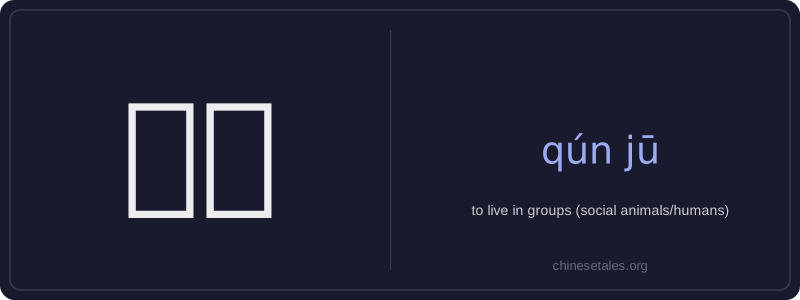
群居 (qún jū) literally combines 群 (qún), meaning 'group' or 'flock,' and 居 (jū), meaning 'to live' or 'to reside.' Together, they describe the behavior of living collectively in a social unit — a pattern common among many animal species (like wolves, elephants, or bees) and historically significant for human societies. It emphasizes cohabitation for mutual protection, resource sharing, or cooperative breeding.
This term is used primarily in biological, ecological, and anthropological contexts. While it can refer to human communities, it’s more frequently applied to non-human animals when discussing evolutionary adaptations. Unlike general terms like ‘living together,’ 群居 implies an instinctive or evolved social structure — not just temporary cohabitation. It appears in textbooks, documentaries, scientific articles, and nature writing, often contrasted with 独居 (dú jū, 'solitary living'). The word carries a neutral, descriptive tone and is rarely used in casual daily conversation about modern human life.
Example Sentences
Related Words
国语
‘Guó yǔ’ literally means 'national language'—
无论谁
‘无论谁’ (wú lùn shéi) is a pronoun meaning
外语
‘外语’ literally means ‘outside language’ —
面条
‘面条’ (miàn tiáo) literally means ‘flour str
认同
‘认同’ (tóng rèn) is a verb meaning ‘to ident
违规
违规 (wéi guī) literally means 'to violate rules
亲笔
‘亲笔’ literally means ‘one’s own hand’—comb
不对
不对 (bù duì) literally combines 不 (bù), meani