Word Explanation
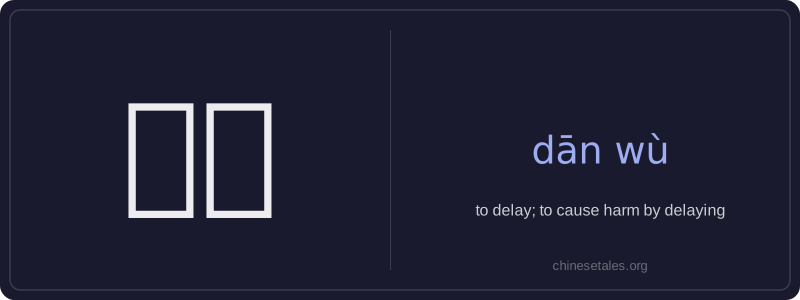
耽误 (dān wù) is a transitive verb meaning 'to delay' or 'to cause harm by delaying' — it carries a strong sense of negative consequence, implying that the delay has led to missed opportunities, lost time, or tangible damage. The first character 耽 (dān) originally means 'to linger' or 'to indulge,' suggesting prolonged inaction; the second character 误 (wù) means 'to mistake' or 'to mislead,' reinforcing the idea of harmful error caused by that delay. Together, they convey not just postponement but consequential negligence — for example, missing a deadline, failing to act in time, or neglecting responsibilities.
This word is commonly used in formal and semi-formal contexts: in workplaces ('don’t delay the project'), education ('don’t let personal issues delay your studies'), healthcare ('delaying treatment can worsen the condition'), and daily life ('I delayed picking up my child and made them wait'). It’s rarely neutral — even small delays described with 耽误 imply some degree of fault or regret.
Example Sentences
Related Words
国语
‘Guó yǔ’ literally means 'national language'—
无论谁
‘无论谁’ (wú lùn shéi) is a pronoun meaning
外语
‘外语’ literally means ‘outside language’ —
面条
‘面条’ (miàn tiáo) literally means ‘flour str
认同
‘认同’ (tóng rèn) is a verb meaning ‘to ident
违规
违规 (wéi guī) literally means 'to violate rules
亲笔
‘亲笔’ literally means ‘one’s own hand’—comb
不对
不对 (bù duì) literally combines 不 (bù), meani