Word Explanation
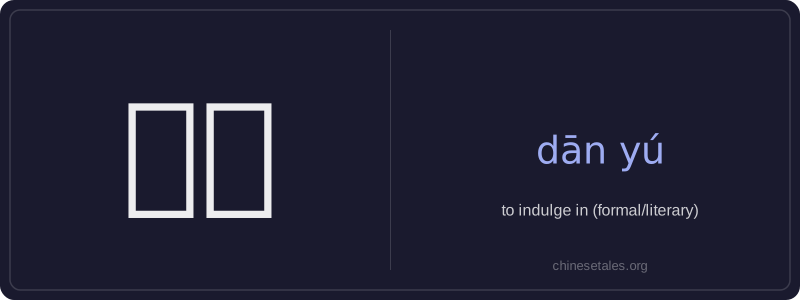
耽于 is a formal, literary verb meaning 'to indulge in' or 'to become excessively absorbed in' something—often with a negative connotation of neglecting duties or responsibilities. The character 耽 (dān) originally means 'to delay' or 'to linger', implying prolonged, unproductive engagement; 于 (yú) is a preposition indicating the object or domain of that indulgence (e.g., 'in pleasure', 'in fantasy'). Together, they form a compact, classical construction used primarily in written Chinese, essays, historical narratives, or formal speeches—not in casual conversation.
This phrase typically governs abstract nouns like 逸乐 (pleasure), 幻想 (fantasy), 酒色 (wine and women), or 声色 (music and sensual pleasures). It carries moral or rhetorical weight, often warning against excess or self-deception. Because of its literary register, it rarely appears in spoken Mandarin unless quoting classical texts or adopting an elevated tone.
Example Sentences
Related Words
国语
‘Guó yǔ’ literally means 'national language'—
无论谁
‘无论谁’ (wú lùn shéi) is a pronoun meaning
外语
‘外语’ literally means ‘outside language’ —
面条
‘面条’ (miàn tiáo) literally means ‘flour str
认同
‘认同’ (tóng rèn) is a verb meaning ‘to ident
违规
违规 (wéi guī) literally means 'to violate rules
亲笔
‘亲笔’ literally means ‘one’s own hand’—comb
不对
不对 (bù duì) literally combines 不 (bù), meani