Word Explanation
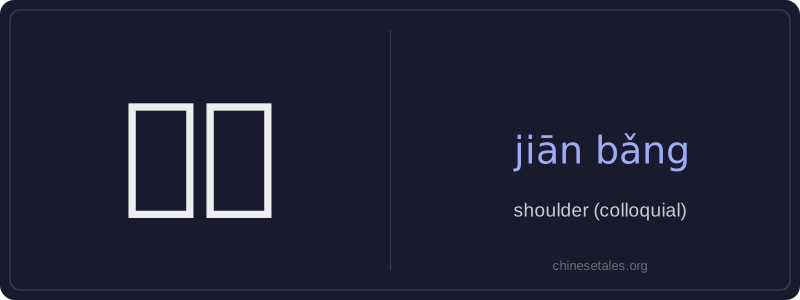
肩膀 (jiān bǎng) literally combines 肩 (jiān), meaning 'shoulder' or 'upper back', and 膀 (bǎng), which on its own can mean 'arm' or 'wing' but here reinforces the anatomical sense. Together, they form a common, colloquial term for the shoulder—the joint and surrounding area where the arm connects to the torso. Unlike the more formal or medical term 肩 (jiān) alone, 肩膀 is widely used in everyday speech, especially when referring to physical sensation, posture, carrying weight, or emotional metaphors (e.g., 'bearing responsibility').
The word often appears in expressions related to physical effort ('lift with your shoulders'), pain ('my shoulders hurt'), or figurative burdens ('carry the weight on one’s shoulders'). It’s also frequently paired with verbs like 拿 (ná, 'to hold'), 抬 (tái, 'to lift'), or 酸 (suān, 'to ache'). While both characters are needed for this compound, neither stands alone with this exact meaning—膀 by itself rarely means 'shoulder' in modern Mandarin.
Example Sentences
Related Words
国语
‘Guó yǔ’ literally means 'national language'—
无论谁
‘无论谁’ (wú lùn shéi) is a pronoun meaning
外语
‘外语’ literally means ‘outside language’ —
面条
‘面条’ (miàn tiáo) literally means ‘flour str
认同
‘认同’ (tóng rèn) is a verb meaning ‘to ident
违规
违规 (wéi guī) literally means 'to violate rules
亲笔
‘亲笔’ literally means ‘one’s own hand’—comb
不对
不对 (bù duì) literally combines 不 (bù), meani