Word Explanation
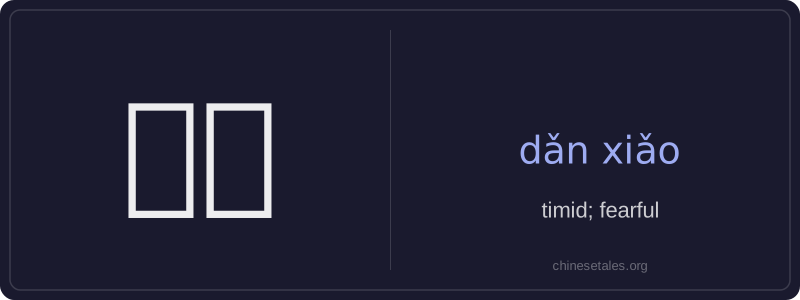
胆小 (dǎn xiǎo) literally means 'small胆 (gallbladder)' — a traditional Chinese metaphor where the gallbladder symbolizes courage and boldness. Thus, 胆小 describes someone who lacks confidence or is easily frightened, especially in social or unfamiliar situations. It carries a mild, descriptive tone — not harshly judgmental, but often implying immaturity or inexperience rather than deep psychological fear.
This word is commonly used to describe children, animals, or people reacting to new environments, authority figures, or challenges. Unlike more clinical terms like 恐惧 (fear), 胆小 focuses on habitual shyness or hesitation — for example, a child who won’t speak up in class or a pet that hides when guests arrive. It’s frequently paired with subject pronouns or nouns and functions as a predicate adjective (e.g., 他很胆小) or attributive modifier (e.g., 胆小的孩子).
Example Sentences
Related Words
国语
‘Guó yǔ’ literally means 'national language'—
无论谁
‘无论谁’ (wú lùn shéi) is a pronoun meaning
外语
‘外语’ literally means ‘outside language’ —
亲笔
‘亲笔’ literally means ‘one’s own hand’—comb
面条
‘面条’ (miàn tiáo) literally means ‘flour str
认为
‘认为’ (rèn wéi) is a transitive verb meaning
认同
‘认同’ (tóng rèn) is a verb meaning ‘to ident
短袜
‘短袜’ (duǎn wà) literally means ‘short sock