Word Explanation
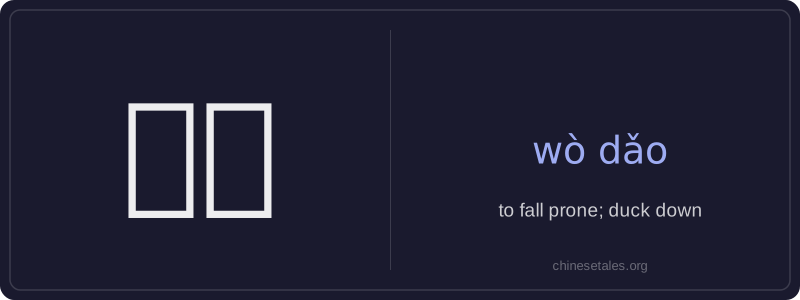
‘卧倒’ (wò dǎo) is a compound verb meaning ‘to fall prone’ or ‘to duck down flat on the ground’, typically for safety, medical reasons, or military instruction. The first character 卧 (wò) means ‘to lie down’ or ‘to recline’, often implying a deliberate, controlled posture; the second character 倒 (dǎo) means ‘to fall’ or ‘to collapse’, adding the sense of lowering one’s body fully and quickly—especially face-down. Together, they convey an urgent, full-body descent to ground level, distinct from simply sitting or kneeling.
This term is frequently used in emergency drills (e.g., earthquake or gunfire response), first-aid instructions (e.g., for fainting or shock), and military training. It emphasizes both speed and complete horizontal positioning—not just crouching or bending. While it can appear in animal-related contexts (e.g., describing a sick dog lying flat), its primary usage is human-centered and action-oriented, reflecting intentionality and situational urgency rather than passive rest.
Example Sentences
Related Words
国语
‘Guó yǔ’ literally means 'national language'—
无论谁
‘无论谁’ (wú lùn shéi) is a pronoun meaning
外语
‘外语’ literally means ‘outside language’ —
亲笔
‘亲笔’ literally means ‘one’s own hand’—comb
我的
我的 (wǒ de) is a possessive pronoun meaning 'my'
不对
不对 (bù duì) literally combines 不 (bù), meani
面条
‘面条’ (miàn tiáo) literally means ‘flour str
认为
‘认为’ (rèn wéi) is a transitive verb meaning