Word Explanation
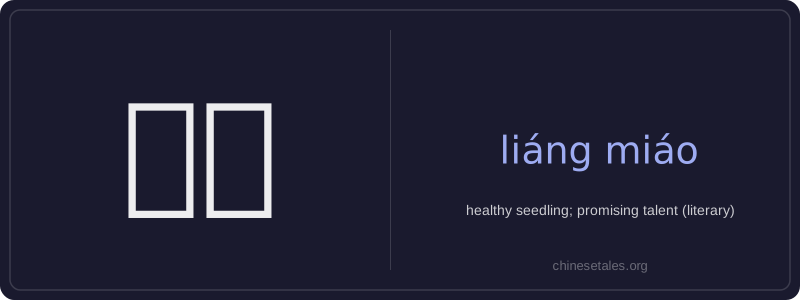
'良苗' literally means 'good seedling' — 良 (liáng) conveys 'excellent, healthy, virtuous', while 苗 (miáo) means 'seedling, young plant'. Together, the term describes a vigorous, well-developed young plant with strong growth potential. It is commonly used in agricultural and horticultural contexts to refer to high-quality seedlings selected for planting.
In literary or figurative usage, 良苗 extends metaphorically to describe promising young people — especially students, apprentices, or emerging professionals — who show exceptional talent, moral integrity, and potential for future achievement. This usage appears in formal writing, educational discourse, and speeches praising youth development. Though poetic, it is not archaic and remains appropriate in modern standard Chinese when emphasizing innate quality and developmental promise.
Example Sentences
Related Words
国语
‘Guó yǔ’ literally means 'national language'—
无论谁
‘无论谁’ (wú lùn shéi) is a pronoun meaning
外语
‘外语’ literally means ‘outside language’ —
亲笔
‘亲笔’ literally means ‘one’s own hand’—comb
短袜
‘短袜’ (duǎn wà) literally means ‘short sock
违规
违规 (wéi guī) literally means 'to violate rules
我的
我的 (wǒ de) is a possessive pronoun meaning 'my'
不对
不对 (bù duì) literally combines 不 (bù), meani