Word Explanation
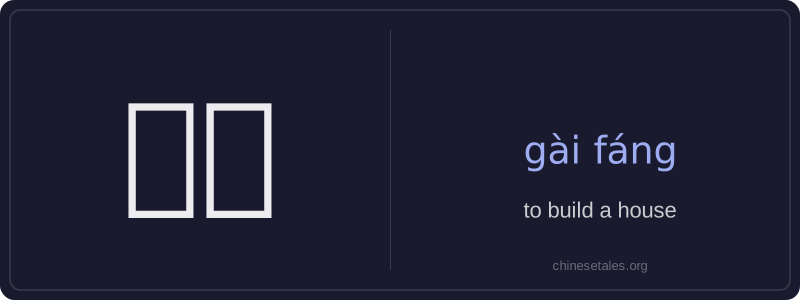
‘盖房’ is a verb meaning 'to build a house' or 'to construct a residence.' It combines the verb 盖 (gài), which means 'to cover' or 'to build' (in architectural contexts), and the noun 房 (fáng), meaning 'room' or 'house.' Together, they form a common compound verb used specifically for residential construction—not for commercial buildings, factories, or infrastructure. The term often implies traditional or small-scale building, such as rural homes or family residences, and carries a practical, hands-on connotation.
This phrase is frequently used in everyday speech, news reports about rural development, and personal narratives—especially when discussing home ownership, village renovation, or post-disaster reconstruction. It’s not formal or technical like 建筑 (jiànzhù, 'construction') or 工程 (gōngchéng, 'engineering project'), but rather grounded and concrete. While it can appear in both past and future tense with appropriate aspect markers (e.g., 正在盖房, 已经盖好了), it rarely stands alone without context—it usually appears with subjects (e.g., 他们), objects (e.g., 新房), or time references.
Example Sentences
Related Words
国语
‘Guó yǔ’ literally means 'national language'—
无论谁
‘无论谁’ (wú lùn shéi) is a pronoun meaning
外语
‘外语’ literally means ‘outside language’ —
亲笔
‘亲笔’ literally means ‘one’s own hand’—comb
认同
‘认同’ (tóng rèn) is a verb meaning ‘to ident
短袜
‘短袜’ (duǎn wà) literally means ‘short sock
违规
违规 (wéi guī) literally means 'to violate rules
我的
我的 (wǒ de) is a possessive pronoun meaning 'my'