Word Explanation
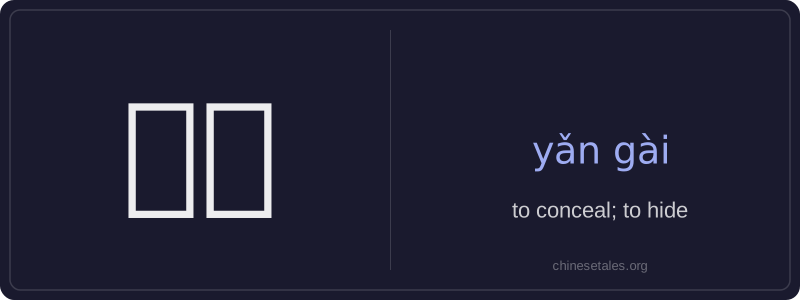
‘掩盖’ is a compound verb meaning ‘to conceal’ or ‘to hide’, often with the implication of deliberately covering up something undesirable—such as a mistake, truth, or unpleasant fact. The first character 掩 (yǎn) means ‘to cover’ or ‘to shield’, and the second character 盖 (gài) also means ‘to cover’ or ‘to cap’. Together, they reinforce the idea of full, intentional concealment—not just physical hiding but also metaphorical suppression or obfuscation.
This word carries a slightly negative connotation and is commonly used in formal writing, news reports, and discussions about ethics, accountability, or deception. It frequently appears with objects like 真相 (truth), 错误 (mistake), 缺点 (flaw), or 事实 (fact). Unlike neutral words like 隐藏 (to hide), 掩盖 suggests an attempt to prevent discovery or avoid responsibility, making it unsuitable for innocent or harmless contexts like hiding a gift.
Example Sentences
Related Words
国语
‘Guó yǔ’ literally means 'national language'—
无论谁
‘无论谁’ (wú lùn shéi) is a pronoun meaning
外语
‘外语’ literally means ‘outside language’ —
亲笔
‘亲笔’ literally means ‘one’s own hand’—comb
认同
‘认同’ (tóng rèn) is a verb meaning ‘to ident
短袜
‘短袜’ (duǎn wà) literally means ‘short sock
违规
违规 (wéi guī) literally means 'to violate rules
我的
我的 (wǒ de) is a possessive pronoun meaning 'my'