Word Explanation
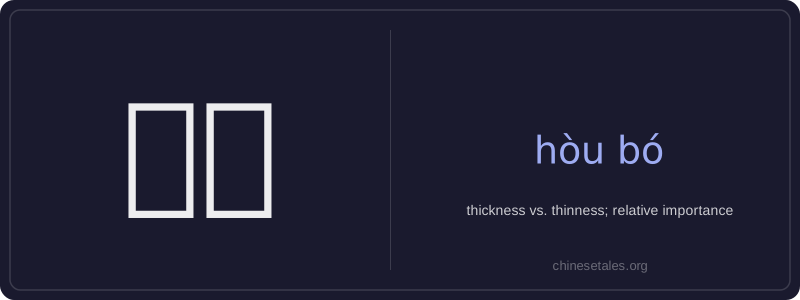
厚薄 (hòu bó) is a compound noun formed by combining 厚 (hòu, 'thick') and 薄 (bó, 'thin'). Literally, it means 'thickness vs. thinness'—a paired concept highlighting contrast or comparison between two extremes of dimension. It’s commonly used to describe physical attributes like the thickness of fur, skin, feathers, or animal hides, especially in contexts involving biology, veterinary care, or traditional craftsmanship (e.g., leather or wool processing).
Figuratively, 厚薄 also conveys relative importance, weight, or degree—such as 'the thickness or thinness of sentiment' (感情的厚薄) meaning how deep or shallow a relationship feels, or 'the thickness or thinness of favor' (人情的厚薄) indicating social obligation or closeness. Unlike standalone adjectives, 厚薄 functions exclusively as a noun and typically appears after measure words (e.g., 一层厚薄) or in abstract comparisons.
Example Sentences
Related Words
国语
‘Guó yǔ’ literally means 'national language'—
无论谁
‘无论谁’ (wú lùn shéi) is a pronoun meaning
外语
‘外语’ literally means ‘outside language’ —
亲笔
‘亲笔’ literally means ‘one’s own hand’—comb
面条
‘面条’ (miàn tiáo) literally means ‘flour str
认同
‘认同’ (tóng rèn) is a verb meaning ‘to ident
短袜
‘短袜’ (duǎn wà) literally means ‘short sock
违规
违规 (wéi guī) literally means 'to violate rules