Word Explanation
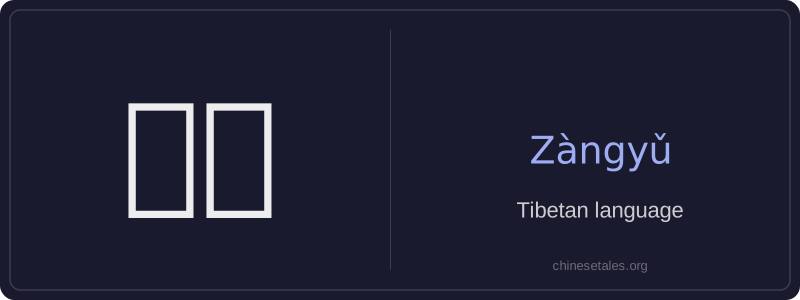
藏语 (Zàngyǔ) literally combines 藏 (Zàng), referring to Tibet or the Tibetan people, and 语 (yǔ), meaning 'language'. Together, it denotes the Sino-Tibetan language spoken primarily by ethnic Tibetans in the Tibet Autonomous Region and neighboring areas of Qinghai, Sichuan, Gansu, and Yunnan provinces. It has several major dialects—including Ü-Tsang, Kham, and Amdo—with Standard Tibetan based on the Lhasa dialect.
The term is used formally and academically to refer to the language as a whole, distinguishing it from other regional languages or scripts in China. While written Tibetan uses its own unique script derived from ancient Indian Brahmi, spoken varieties differ significantly across regions. Learners may encounter 藏语 in contexts such as language courses, cultural studies, bilingual education policies, or travel preparation for Tibetan areas.
Example Sentences
Related Words
国语
‘Guó yǔ’ literally means 'national language'—
无论谁
‘无论谁’ (wú lùn shéi) is a pronoun meaning
外语
‘外语’ literally means ‘outside language’ —
亲笔
‘亲笔’ literally means ‘one’s own hand’—comb
面条
‘面条’ (miàn tiáo) literally means ‘flour str
认同
‘认同’ (tóng rèn) is a verb meaning ‘to ident
短袜
‘短袜’ (duǎn wà) literally means ‘short sock
规范
规范 (guīfàn) is a versatile word meaning 'stand