Word Explanation
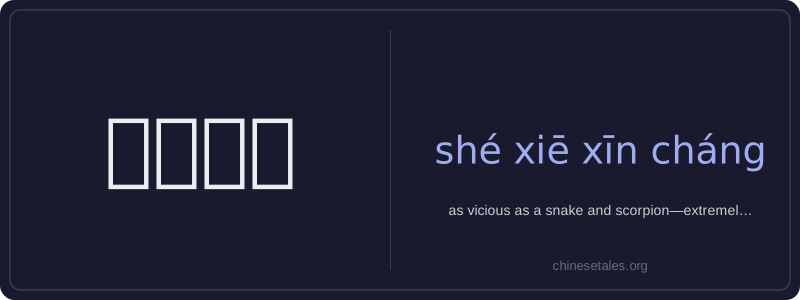
‘蛇蝎心肠’ (shé xiē xīn cháng) is a vivid, four-character idiom that literally means ‘a heart and intestines like those of a snake and scorpion.’ In Chinese culture, snakes and scorpions symbolize hidden danger, treachery, and venomous cruelty—so the phrase describes someone whose inner nature is profoundly malicious, deceitful, and ruthlessly cold-blooded. It emphasizes not just anger or harshness, but calculated, underhanded viciousness—often directed at people close to the perpetrator.
This expression is almost always used in literary, critical, or moral judgment contexts—not casual speech—and carries strong negative connotation. It functions as a noun phrase (e.g., ‘She has a snake-and-scorpion heart’) and frequently appears after verbs like ‘有’ (yǒu, ‘to have’) or ‘长着’ (zhǎng zhe, ‘to possess’). While the characters individually mean ‘snake,’ ‘scorpion,’ ‘heart,’ and ‘intestines,’ the compound is idiomatic: it’s not about anatomy but about moral character, evoking visceral disgust rather than clinical description.
Example Sentences
Related Words
国语
‘Guó yǔ’ literally means 'national language'—
无论谁
‘无论谁’ (wú lùn shéi) is a pronoun meaning
外语
‘外语’ literally means ‘outside language’ —
亲笔
‘亲笔’ literally means ‘one’s own hand’—comb
面条
‘面条’ (miàn tiáo) literally means ‘flour str
认同
‘认同’ (tóng rèn) is a verb meaning ‘to ident
短袜
‘短袜’ (duǎn wà) literally means ‘short sock
规范
规范 (guīfàn) is a versatile word meaning 'stand