Word Explanation
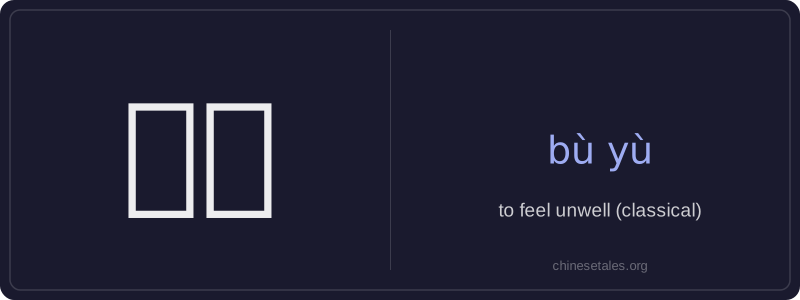
‘不豫’ is a classical Chinese expression meaning ‘to feel unwell’ or ‘to be indisposed’, often used in historical texts, formal writing, or literary contexts. Literally, ‘不’ means ‘not’, and ‘豫’ originally meant ‘ease’, ‘comfort’, or ‘leisure’ — so together, ‘not at ease’ conveys physical discomfort or mild illness. Unlike modern terms like ‘不舒服’ or ‘生病’, ‘不豫’ carries an elegant, restrained tone and is rarely used in casual speech.
This term frequently appears in historical records describing emperors or scholars who are unwell — for instance, official chronicles may note ‘帝不豫’ (the emperor was unwell) as a diplomatic way to report illness without alarm. It implies a temporary, non-severe condition, sometimes with connotations of melancholy or mental unease as well as physical symptoms. Learners should recognize it primarily in reading classical or semi-classical materials, not in daily conversation.
Example Sentences
Related Words
国语
‘Guó yǔ’ literally means 'national language'—
无论谁
‘无论谁’ (wú lùn shéi) is a pronoun meaning
不对
不对 (bù duì) literally combines 不 (bù), meani
外语
‘外语’ literally means ‘outside language’ —
短袜
‘短袜’ (duǎn wà) literally means ‘short sock
违规
违规 (wéi guī) literally means 'to violate rules
亲笔
‘亲笔’ literally means ‘one’s own hand’—comb
我的
我的 (wǒ de) is a possessive pronoun meaning 'my'