Word Explanation
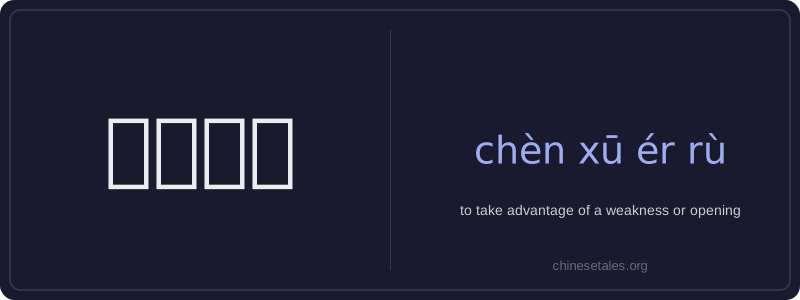
‘趁虚而入’ is a four-character idiom (chéngyǔ) meaning ‘to take advantage of a weakness or opening’ — literally, ‘seize the opportunity while [something] is weak and enter.’ The characters break down as: 趁 (chèn) = ‘to seize/act upon,’ 虚 (xū) = ‘weakness, emptiness, or vulnerability,’ 而 (ér) = a classical conjunction indicating sequence (‘and then’), and 入 (rù) = ‘to enter.’ Together, they evoke the image of slipping in when defenses are down — like an invader entering a city with undefended gates, or a pathogen invading the body during illness.
This idiom is commonly used in both literal and figurative contexts: in medicine (e.g., viruses taking hold when immunity is low), business (competitors moving in during market instability), or personal relationships (someone exploiting emotional fragility). It carries a slightly negative or cautionary connotation, implying opportunism rather than fair play. It’s formal and literary, often appearing in news reports, essays, or health advisories — less common in casual speech.
Example Sentences
Related Words
国语
‘Guó yǔ’ literally means 'national language'—
无论谁
‘无论谁’ (wú lùn shéi) is a pronoun meaning
不对
不对 (bù duì) literally combines 不 (bù), meani
外语
‘外语’ literally means ‘outside language’ —
违规
违规 (wéi guī) literally means 'to violate rules
亲笔
‘亲笔’ literally means ‘one’s own hand’—comb
我的
我的 (wǒ de) is a possessive pronoun meaning 'my'
短袜
‘短袜’ (duǎn wà) literally means ‘short sock