Word Explanation
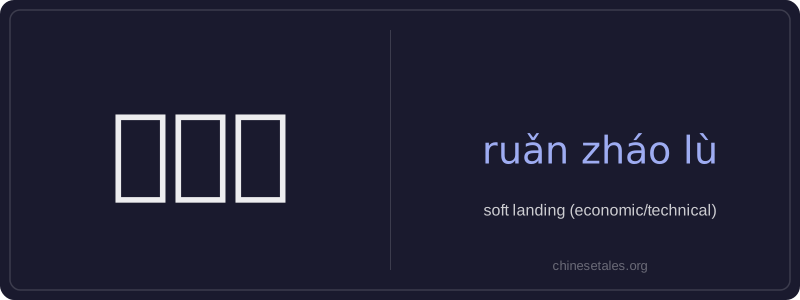
'Soft landing' (软着陆) is a technical and economic metaphor borrowed from aerospace, where it literally means a controlled, gentle touchdown—without damage or abrupt shock. In Chinese, 软 (ruǎn) means 'soft' or 'gentle', 着 (zhuó) is the verb 'to land' or 'to touch down', and 陆 (lù) means 'land' or 'ground'. Together, they form a compound noun describing a deliberate, gradual, and stable transition—especially used in policy, finance, and macroeconomic contexts.
The term is most commonly applied to economic adjustments: for example, slowing rapid growth without triggering recession, cooling overheated property markets without collapse, or tightening monetary policy while maintaining employment. It implies careful calibration, foresight, and avoidance of volatility. Though rooted in engineering, its usage in modern Chinese media and official discourse is overwhelmingly figurative and socio-economic—not literal aviation or spaceflight.
Example Sentences
Related Words
国语
‘Guó yǔ’ literally means 'national language'—
无论谁
‘无论谁’ (wú lùn shéi) is a pronoun meaning
不对
不对 (bù duì) literally combines 不 (bù), meani
外语
‘外语’ literally means ‘outside language’ —
违规
违规 (wéi guī) literally means 'to violate rules
亲笔
‘亲笔’ literally means ‘one’s own hand’—comb
我的
我的 (wǒ de) is a possessive pronoun meaning 'my'
短袜
‘短袜’ (duǎn wà) literally means ‘short sock