Word Explanation
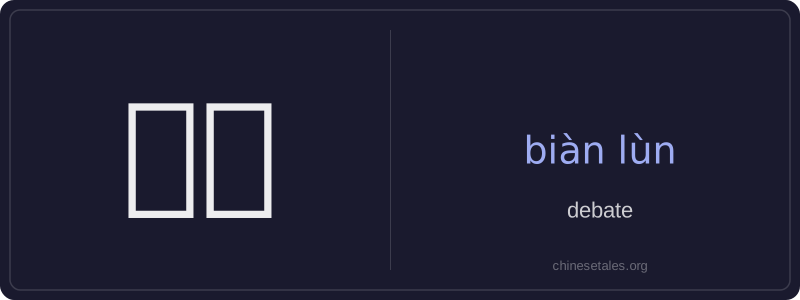
辩论 (biàn lùn) means 'debate' — a formal, structured exchange of opposing views on a specific topic. The first character 辩 (biàn) means 'to argue' or 'to refute', emphasizing reasoning and counter-argument; the second character 论 (lùn) means 'to discuss' or 'to discourse', highlighting analysis and exposition. Together, they convey a collaborative yet competitive intellectual activity where participants present evidence, logic, and rebuttals.
This word is commonly used in academic, educational, and public speaking contexts — such as school debate clubs, university competitions, or televised political discussions. While it can function as a noun ('a debate'), it also serves as a verb meaning 'to debate' (e.g., 我们要辩论这个议题). It carries a neutral-to-formal register and implies seriousness, preparation, and respect for opposing perspectives — unlike casual arguing (吵架), which is emotionally charged and unstructured.
Example Sentences
Related Words
国语
‘Guó yǔ’ literally means 'national language'—
无论谁
‘无论谁’ (wú lùn shéi) is a pronoun meaning
不对
不对 (bù duì) literally combines 不 (bù), meani
外语
‘外语’ literally means ‘outside language’ —
违规
违规 (wéi guī) literally means 'to violate rules
亲笔
‘亲笔’ literally means ‘one’s own hand’—comb
我的
我的 (wǒ de) is a possessive pronoun meaning 'my'
短袜
‘短袜’ (duǎn wà) literally means ‘short sock