Word Explanation
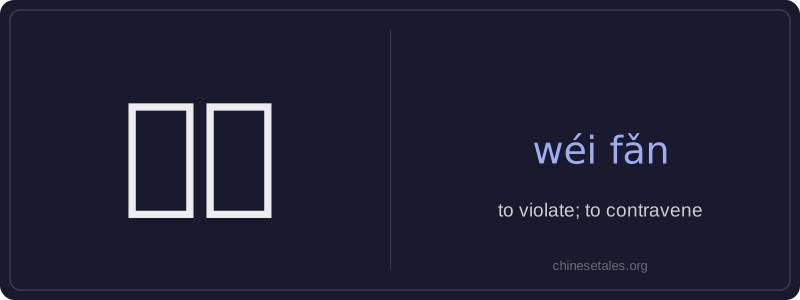
违反 (wéi fǎn) is a verb meaning 'to violate' or 'to contravene'—typically referring to breaking a rule, law, regulation, agreement, or principle. The character 违 (wéi) means 'to go against' or 'to disobey', while 反 (fǎn) reinforces this sense with meanings like 'to oppose' or 'to reverse'. Together, they form a compound that emphasizes deliberate noncompliance with an established standard or expectation.
This word is commonly used in formal, official, or serious contexts—such as legal documents, workplace policies, medical guidelines, or public health directives. It carries a negative connotation and implies accountability; saying someone 违反 a rule suggests they have knowingly or negligently breached it. It's often followed by the object of violation (e.g., 法律, 规定, 协议, 医嘱), and usually appears in written or semi-formal spoken Chinese rather than casual conversation.
Example Sentences
Related Words
国语
‘Guó yǔ’ literally means 'national language'—
无论谁
‘无论谁’ (wú lùn shéi) is a pronoun meaning
不对
不对 (bù duì) literally combines 不 (bù), meani
外语
‘外语’ literally means ‘outside language’ —
违规
违规 (wéi guī) literally means 'to violate rules
亲笔
‘亲笔’ literally means ‘one’s own hand’—comb
我的
我的 (wǒ de) is a possessive pronoun meaning 'my'
短袜
‘短袜’ (duǎn wà) literally means ‘short sock