Word Explanation
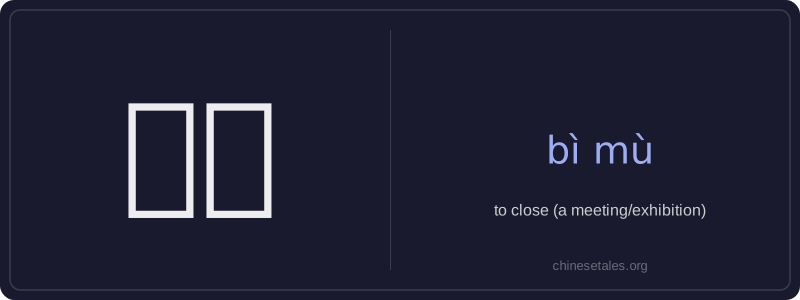
闭幕 (bì mù) literally means 'to close the curtain' — 闭 (bì) means 'to close' or 'to shut', and 幕 (mù) means 'curtain' or 'screen'. Together, they form a compound verb meaning 'to close (an event)', especially formal gatherings such as conferences, exhibitions, festivals, or sports games. The term evokes the theatrical image of drawing the curtain at the end of a performance, symbolizing conclusion and finality.
This word is used almost exclusively in formal, institutional, or ceremonial contexts — you won’t use it for closing a shop or ending a casual meeting. It often appears in official announcements, news headlines, or speeches, and is frequently paired with nouns like 仪式 (yíshì, ceremony), 式 (shì, -ceremony), or 大会 (dàhuì, congress). While grammatically a verb, 闭幕 can also function as a noun in phrases like 闭幕式 (bìmùshì, closing ceremony).
Example Sentences
Related Words
国语
‘Guó yǔ’ literally means 'national language'—
无论谁
‘无论谁’ (wú lùn shéi) is a pronoun meaning
不对
不对 (bù duì) literally combines 不 (bù), meani
外语
‘外语’ literally means ‘outside language’ —
违规
违规 (wéi guī) literally means 'to violate rules
亲笔
‘亲笔’ literally means ‘one’s own hand’—comb
我的
我的 (wǒ de) is a possessive pronoun meaning 'my'
短袜
‘短袜’ (duǎn wà) literally means ‘short sock