Word Explanation
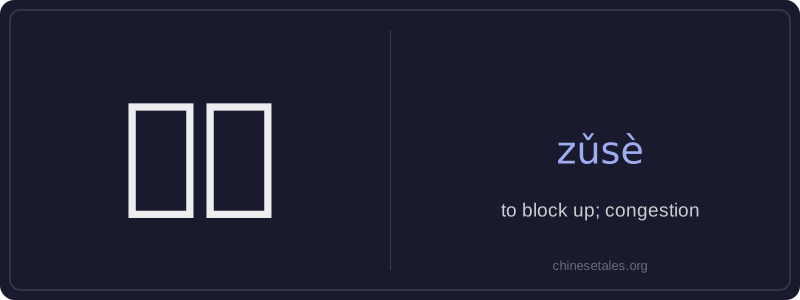
阻塞 (zǔsè) is a compound word formed from 阻 (zǔ), meaning 'to obstruct' or 'to hinder', and 塞 (sè), meaning 'to block' or 'to stuff'. Together, they emphasize complete or severe obstruction — not just a partial slowdown, but a full stoppage of flow. It commonly describes physical blockages in biological, mechanical, or systemic contexts: blood vessels, pipes, traffic, data networks, or even abstract channels like communication.
The word carries a slightly formal or technical tone and appears frequently in medical, engineering, and bureaucratic language. As a verb, it takes objects directly (e.g., 阻塞血管); as a noun, it often follows classifiers like 一處 (yì chù) or 一種 (yì zhǒng). Unlike the more casual 堵 (dǔ), 阻塞 implies seriousness and often urgency — for example, a blocked artery or a clogged sewer line demands immediate attention.
Example Sentences
Related Words
国语
‘Guó yǔ’ literally means 'national language'—
无论谁
‘无论谁’ (wú lùn shéi) is a pronoun meaning
不对
不对 (bù duì) literally combines 不 (bù), meani
外语
‘外语’ literally means ‘outside language’ —
违规
违规 (wéi guī) literally means 'to violate rules
亲笔
‘亲笔’ literally means ‘one’s own hand’—comb
我的
我的 (wǒ de) is a possessive pronoun meaning 'my'
短袜
‘短袜’ (duǎn wà) literally means ‘short sock