Word Explanation
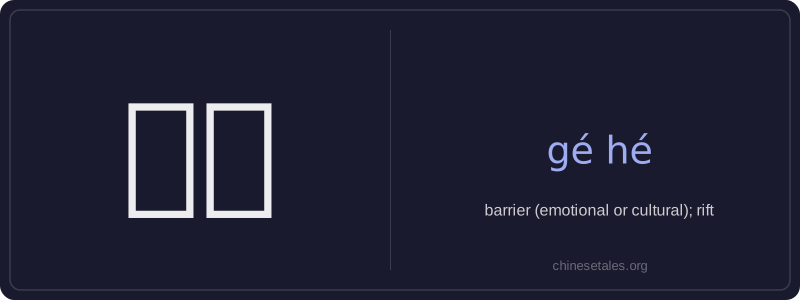
‘隔阂’ (gé hé) literally combines ‘隔’ (gé), meaning ‘to separate’ or ‘to isolate’, and ‘阂’ (hé), meaning ‘obstruction’ or ‘barrier’. Together, they form a noun describing an intangible but significant emotional, cultural, or psychological barrier between people or groups — not a physical wall, but a sense of distance, misunderstanding, or mistrust. It often arises from differences in background, values, language, or experience.
This word is commonly used in discussions about interpersonal relationships, cross-cultural communication, family conflicts, or social divisions. It carries a slightly formal or literary tone and appears frequently in essays, news reports, and psychological or sociological contexts. Unlike neutral terms like ‘difference’, ‘隔阂’ implies a problematic, unresolved separation that hinders connection or cooperation — it suggests something that needs bridging, not just acknowledging.
Example Sentences
Related Words
国语
‘Guó yǔ’ literally means 'national language'—
无论谁
‘无论谁’ (wú lùn shéi) is a pronoun meaning
不对
不对 (bù duì) literally combines 不 (bù), meani
外语
‘外语’ literally means ‘outside language’ —
违规
违规 (wéi guī) literally means 'to violate rules
亲笔
‘亲笔’ literally means ‘one’s own hand’—comb
我的
我的 (wǒ de) is a possessive pronoun meaning 'my'
短袜
‘短袜’ (duǎn wà) literally means ‘short sock