Word Explanation
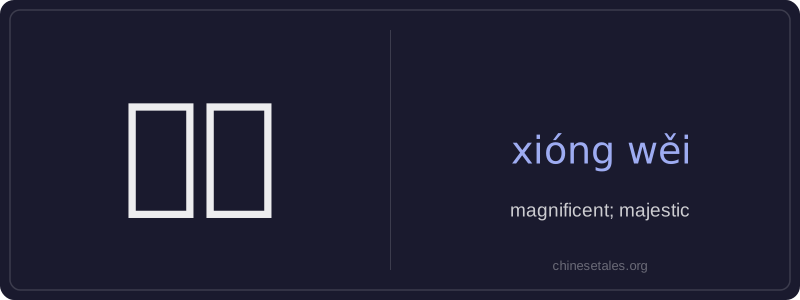
‘雄伟’ (xióng wěi) is an adjective meaning ‘magnificent’ or ‘majestic’, used primarily to describe large-scale, awe-inspiring physical features—especially natural landscapes or grand human-made structures. The first character 雄 (xióng) conveys strength, power, and dominance (as in ‘male’ or ‘heroic’), while 伟 (wěi) means ‘great’, ‘impressive’, or ‘grand’. Together, they emphasize imposing scale, dignified grandeur, and a sense of solemn beauty—not mere size, but size combined with dignity and visual impact.
This word is commonly applied to mountains, palaces, temples, bridges, city skylines, and monuments. It carries a formal, literary tone and appears frequently in descriptive writing, travel guides, and official commentary—but rarely in casual speech. It does not describe people’s appearance or behavior directly (unlike ‘handsome’ or ‘impressive’ in English); using it for a person would sound unnatural or overly poetic unless metaphorically referencing their achievements or presence on a monumental scale.
Example Sentences
Related Words
国语
‘Guó yǔ’ literally means 'national language'—
无论谁
‘无论谁’ (wú lùn shéi) is a pronoun meaning
不对
不对 (bù duì) literally combines 不 (bù), meani
外语
‘外语’ literally means ‘outside language’ —
违规
违规 (wéi guī) literally means 'to violate rules
亲笔
‘亲笔’ literally means ‘one’s own hand’—comb
我的
我的 (wǒ de) is a possessive pronoun meaning 'my'
短袜
‘短袜’ (duǎn wà) literally means ‘short sock