Word Explanation
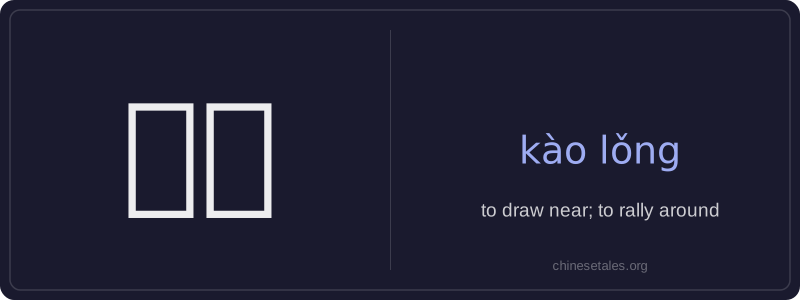
靠拢 (kào lǒng) is a compound verb meaning 'to draw near' or 'to rally around'—literally combining 靠 (kào, 'to lean against, rely on') and 拢 (lǒng, 'to gather, bring together'). Together, they convey the idea of moving physically or figuratively closer to a person, group, or center, often implying unity, alignment, or seeking safety or support. It’s commonly used in both concrete and abstract contexts: animals huddling for warmth, people gathering around a leader, or supporters converging on a shared cause.
The word carries a subtle connotation of voluntary movement toward cohesion—it’s not forced proximity but intentional coming-together. While it can describe physical closeness (e.g., birds clustering on a branch), it’s equally frequent in political, social, or organizational discourse (e.g., members aligning with a party platform). It’s slightly formal but widely understood in spoken and written Chinese, especially in news, speeches, and descriptive narratives about group behavior.
Example Sentences
Related Words
国语
‘Guó yǔ’ literally means 'national language'—
无论谁
‘无论谁’ (wú lùn shéi) is a pronoun meaning
不对
不对 (bù duì) literally combines 不 (bù), meani
外语
‘外语’ literally means ‘outside language’ —
违规
违规 (wéi guī) literally means 'to violate rules
亲笔
‘亲笔’ literally means ‘one’s own hand’—comb
我的
我的 (wǒ de) is a possessive pronoun meaning 'my'
短袜
‘短袜’ (duǎn wà) literally means ‘short sock