Word Explanation
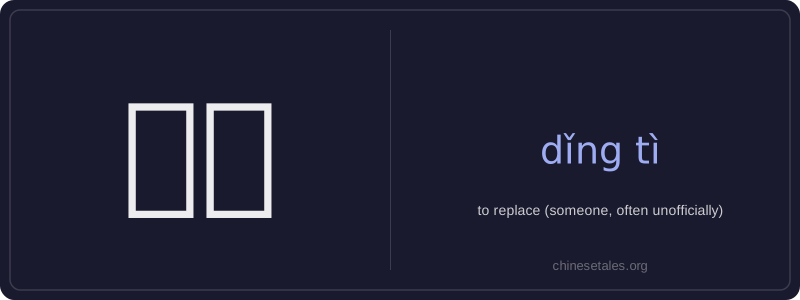
‘顶替’ is a verb meaning to replace someone—often temporarily, unofficially, or without proper authorization. The character 顶 (dǐng) literally means 'to support' or 'to prop up', and 替 (tì) means 'to substitute' or 'to replace'. Together, they evoke the image of stepping into another person’s position, sometimes 'propping up' a role that should be filled by someone else. It frequently carries a slightly negative or suspicious connotation, implying bypassing formal procedures, such as filling a job, exam seat, or duty without permission.
This word is commonly used in contexts involving positions, responsibilities, or opportunities—especially when legitimacy, fairness, or official approval is in question. It appears often in news reports about academic fraud (e.g., taking exams for others), workplace impropriety, or bureaucratic irregularities. Unlike neutral synonyms like ‘代替’, ‘顶替’ suggests substitution that violates rules or expectations, making it register as more critical or judgmental in tone.
Example Sentences
Related Words
国语
‘Guó yǔ’ literally means 'national language'—
无论谁
‘无论谁’ (wú lùn shéi) is a pronoun meaning
不对
不对 (bù duì) literally combines 不 (bù), meani
外语
‘外语’ literally means ‘outside language’ —
违规
违规 (wéi guī) literally means 'to violate rules
亲笔
‘亲笔’ literally means ‘one’s own hand’—comb
我的
我的 (wǒ de) is a possessive pronoun meaning 'my'
短袜
‘短袜’ (duǎn wà) literally means ‘short sock