Word Explanation
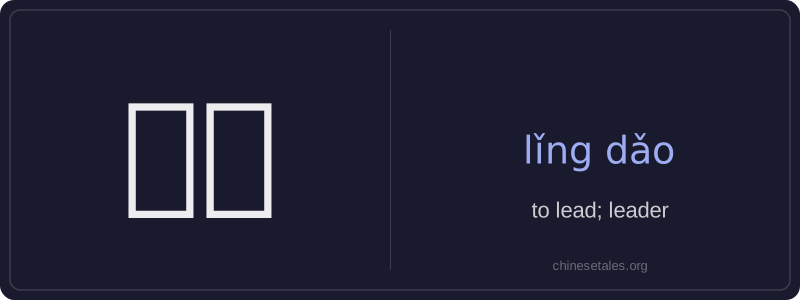
领导 (lǐng dǎo) is a versatile word meaning both 'to lead' (as a verb) and 'leader' or 'leadership' (as a noun). The character 领 (lǐng) originally meant 'collar' but evolved to imply 'to take charge of' or 'to guide'; 导 (dǎo) means 'to guide' or 'to direct', as in 导航 (dǎo háng, 'navigation'). Together, they emphasize authoritative guidance — whether describing an action (e.g., leading a team) or a person/role (e.g., a department head or government official). It carries formal, respectful connotations and is commonly used in organizational, political, and workplace contexts.
In spoken Chinese, 领导 is often used as a polite, somewhat deferential term of address — similar to 'sir/madam' or 'management' in English — especially when speaking to or about superiors. As a noun, it’s usually singular in reference but can be pluralized contextually (e.g., 公司领导, 'company leaders'). Unlike casual words like 带头 (dài tóu, 'to take the lead'), 领导 implies institutional authority and responsibility.
Example Sentences
Related Words
国语
‘Guó yǔ’ literally means 'national language'—
无论谁
‘无论谁’ (wú lùn shéi) is a pronoun meaning
不对
不对 (bù duì) literally combines 不 (bù), meani
外语
‘外语’ literally means ‘outside language’ —
违规
违规 (wéi guī) literally means 'to violate rules
亲笔
‘亲笔’ literally means ‘one’s own hand’—comb
我的
我的 (wǒ de) is a possessive pronoun meaning 'my'
短袜
‘短袜’ (duǎn wà) literally means ‘short sock