Word Explanation
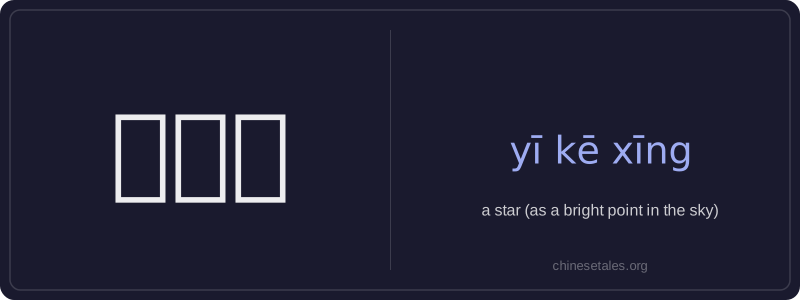
'Yī kē xīng' literally means 'one grain/star' — a countable noun phrase where 'kē' is the standard measure word for small, round, bright celestial objects like stars. Though 'xīng' alone means 'star', Chinese requires a classifier when specifying quantity, so 'yī kē' (not 'yī xīng') is grammatically required for 'a star'. This phrase evokes poetic or observational imagery: gazing at the night sky, describing a single point of light among many, or using 'star' metaphorically to mean 'a shining person' in informal contexts.
It’s commonly used in descriptive writing, children’s stories, astronomy education, and lyrical speech. Unlike English, you cannot omit the measure word — saying *'yī xīng'* is incorrect in standard Mandarin. The phrase carries gentle, sometimes wistful or hopeful connotations, especially when contrasting one star against darkness or a vast sky.
Example Sentences
Related Words
国语
‘Guó yǔ’ literally means 'national language'—
无论谁
‘无论谁’ (wú lùn shéi) is a pronoun meaning
不对
不对 (bù duì) literally combines 不 (bù), meani
外语
‘外语’ literally means ‘outside language’ —
违规
违规 (wéi guī) literally means 'to violate rules
亲笔
‘亲笔’ literally means ‘one’s own hand’—comb
我的
我的 (wǒ de) is a possessive pronoun meaning 'my'
短袜
‘短袜’ (duǎn wà) literally means ‘short sock