Word Explanation
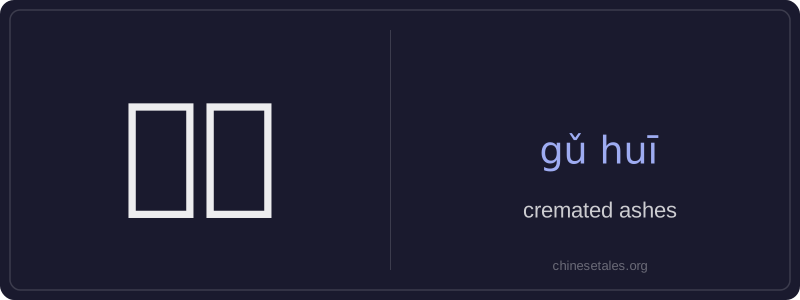
‘骨灰’ literally means ‘bone ash’ and refers specifically to the powdered remains left after a human body is cremated. The first character 骨 (gǔ) means ‘bone’, and the second character 灰 (huī) means ‘ash’ or ‘ashes’ — together, they form a compound noun that denotes the final physical residue of cremation. This term is used in formal, respectful, and often somber contexts related to death, funerals, and memorial practices.
In Chinese culture, handling and storing bone ashes carries deep significance: families may place them in an urn, inter them in a cemetery, scatter them in nature, or enshrine them at home or in a temple. Unlike English ‘ashes’, which can sometimes refer more generally to cremated remains (including non-bone material), ‘骨灰’ emphasizes the calcined bone fragments that constitute the primary substance recovered after cremation. It is never used for animal remains unless explicitly specified (e.g., 宠物骨灰), and it carries no casual or colloquial register — always treated with solemnity.
Example Sentences
Related Words
国语
‘Guó yǔ’ literally means 'national language'—
无论谁
‘无论谁’ (wú lùn shéi) is a pronoun meaning
不对
不对 (bù duì) literally combines 不 (bù), meani
外语
‘外语’ literally means ‘outside language’ —
违规
违规 (wéi guī) literally means 'to violate rules
亲笔
‘亲笔’ literally means ‘one’s own hand’—comb
我的
我的 (wǒ de) is a possessive pronoun meaning 'my'
认同
‘认同’ (tóng rèn) is a verb meaning ‘to ident