Word Explanation
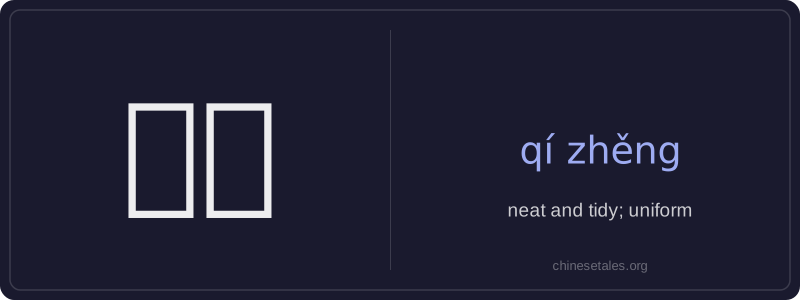
‘齐整’ (qí zhěng) is an adjective describing things that are neatly arranged, uniformly aligned, or well-organized—often with a visual sense of balance and order. The character 齐 means 'even,' 'level,' or 'in unison,' while 整 means 'complete,' 'orderly,' or 'tidy.' Together, they emphasize both uniformity and neatness, implying not just cleanliness but also consistency in appearance or structure.
This word is commonly used to describe physical arrangements: folded clothes, aligned furniture, trimmed hedges, or even rows of animals standing neatly. It carries a slightly formal or literary tone and is more frequent in written Chinese or descriptive speech than in casual daily talk. While it can apply to people (e.g., someone’s appearance), it’s rarely used for abstract concepts like ideas or plans—those would typically use words like ‘有条理’ (yǒu tiáo lǐ) instead.
Example Sentences
Related Words
国语
‘Guó yǔ’ literally means 'national language'—
无论谁
‘无论谁’ (wú lùn shéi) is a pronoun meaning
不对
不对 (bù duì) literally combines 不 (bù), meani
外语
‘外语’ literally means ‘outside language’ —
违规
违规 (wéi guī) literally means 'to violate rules
亲笔
‘亲笔’ literally means ‘one’s own hand’—comb
我的
我的 (wǒ de) is a possessive pronoun meaning 'my'
认同
‘认同’ (tóng rèn) is a verb meaning ‘to ident