Word Explanation
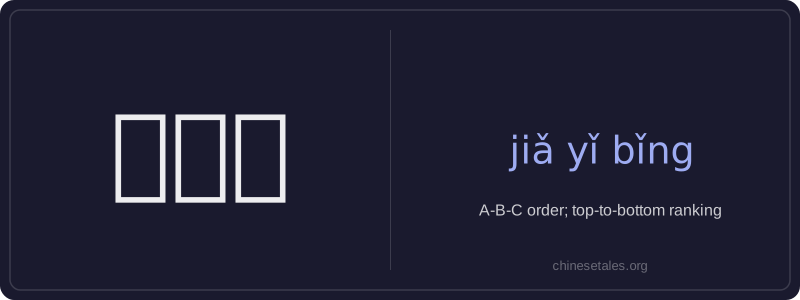
甲乙丙 (jiǎ yǐ bǐng) literally refers to the first three characters of the traditional Chinese 'Heavenly Stems'—a ten-character sequence used historically for calendrical, chronological, and ranking purposes. Though originally part of a larger system (甲 to 癸), this three-character phrase has become idiomatic in modern Chinese to mean 'A-B-C order' or 'top-to-bottom ranking', especially when listing items informally or indicating basic hierarchy without precise numerical scores.
The term carries a neutral, slightly formal or academic tone—it’s common in educational settings, administrative documents, competition results, or comparative analyses. It does not imply judgment of quality, only sequence: 甲 is first, 乙 second, 丙 third. Unlike Western alphabetic ordering, it’s culturally rooted in classical Chinese cosmology but functions today much like 'first, second, third'—concise, conventional, and widely understood across generations.
Example Sentences
Related Words
国语
‘Guó yǔ’ literally means 'national language'—
无论谁
‘无论谁’ (wú lùn shéi) is a pronoun meaning
不对
不对 (bù duì) literally combines 不 (bù), meani
外语
‘外语’ literally means ‘outside language’ —
违规
违规 (wéi guī) literally means 'to violate rules
亲笔
‘亲笔’ literally means ‘one’s own hand’—comb
我的
我的 (wǒ de) is a possessive pronoun meaning 'my'
面条
‘面条’ (miàn tiáo) literally means ‘flour str