Word Explanation
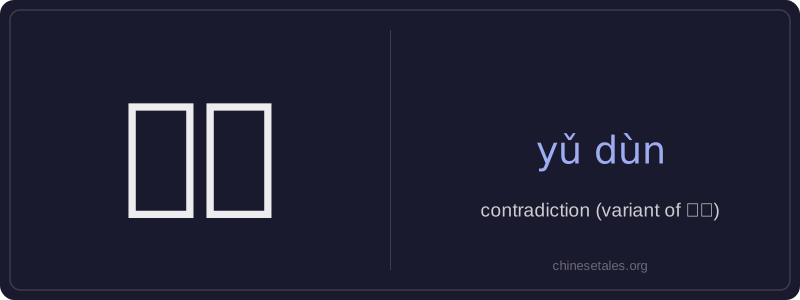
‘予盾’ is a variant spelling of the more common word ‘矛盾’ (máodùn), meaning 'contradiction'—a situation where two ideas, statements, or forces oppose each other logically or practically. Though written with 予 (yǔ) instead of 矛 (máo), it retains the same pronunciation yǔ dùn and meaning. The character 予 traditionally means 'to give' or 'I/we', while 盾 means 'shield'; historically, the term originates from a famous fable about a man who claimed his spear (矛) could pierce any shield—and his shield (盾) could block any spear—revealing an inherent logical inconsistency.
This variant form appears rarely in modern usage and is mostly seen in historical texts, literary allusions, or stylistic variants. It carries the same abstract sense as 矛盾: internal conflict, inconsistency in reasoning, or opposing forces in philosophy, politics, or everyday description. Learners should recognize it as equivalent to 矛盾 but be aware that 矛盾 is overwhelmingly preferred in contemporary speech and writing.
Example Sentences
Related Words
国语
‘Guó yǔ’ literally means 'national language'—
无论谁
‘无论谁’ (wú lùn shéi) is a pronoun meaning
外语
‘外语’ literally means ‘outside language’ —
不对
不对 (bù duì) literally combines 不 (bù), meani
违规
违规 (wéi guī) literally means 'to violate rules
亲笔
‘亲笔’ literally means ‘one’s own hand’—comb
我的
我的 (wǒ de) is a possessive pronoun meaning 'my'
面条
‘面条’ (miàn tiáo) literally means ‘flour str