Word Explanation
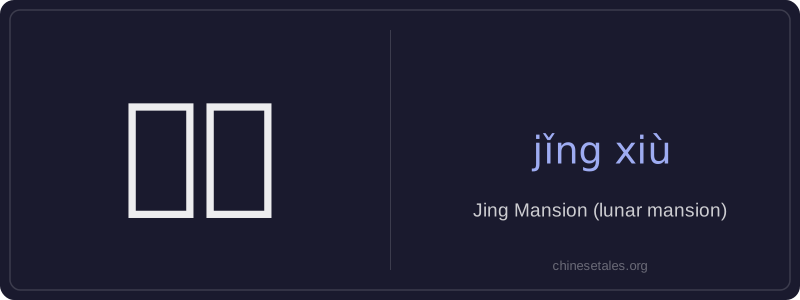
‘Jǐng Xiù’ (Jing Mansion) is one of the 28 lunar mansions in traditional Chinese astronomy, used for tracking the moon’s monthly path across the sky. The character 井 (jǐng) originally means ‘well’, but here it symbolizes a constellation shaped like a well or square pattern; 宿 (xiù) means ‘lodging’ or ‘mansion’, referring to the moon’s nightly ‘stopping place’. Together, 井宿 names a specific asterism near the celestial equator, historically associated with the eastern quadrant and the Azure Dragon.
This term appears primarily in classical texts, astrology, and cultural discussions of ancient Chinese cosmology—not in everyday speech. It’s linked to the ‘Seven Mansions of the East’, and traditionally governs aspects like water, wells, and community resources. Though not tied to modern astronomy, 井宿 remains culturally significant in festivals, feng shui, and historical studies of Chinese star lore.
Example Sentences
Related Words
国语
‘Guó yǔ’ literally means 'national language'—
无论谁
‘无论谁’ (wú lùn shéi) is a pronoun meaning
外语
‘外语’ literally means ‘outside language’ —
不对
不对 (bù duì) literally combines 不 (bù), meani
违规
违规 (wéi guī) literally means 'to violate rules
亲笔
‘亲笔’ literally means ‘one’s own hand’—comb
我的
我的 (wǒ de) is a possessive pronoun meaning 'my'
面条
‘面条’ (miàn tiáo) literally means ‘flour str