Word Explanation
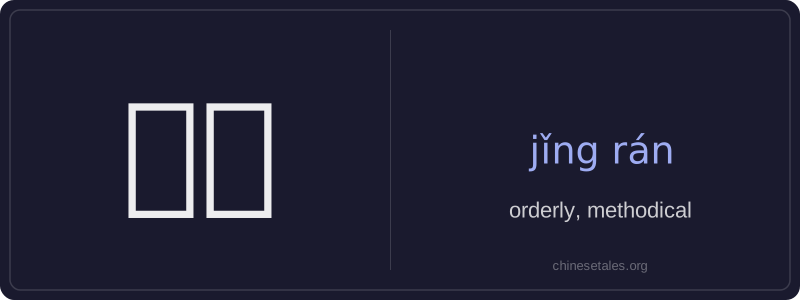
‘井然’ is an adjective meaning ‘orderly,’ ‘methodical,’ or ‘neatly arranged.’ Though it looks like two separate characters, it functions as a fixed two-character compound and is almost always used in the pattern ‘井然有序’ (jǐngrán yǒuxù) — literally ‘well-ordered like a well,’ evoking the ancient Chinese well-field system, where land was divided into neat, symmetrical plots. The character 井 originally referred to a water well but came to symbolize structure and regularity; 然 is a classical suffix indicating state or manner, similar to ‘-ly’ in English.
This word carries a formal, literary tone and is commonly used to describe organized systems, spaces, or processes — such as classrooms, filing systems, schedules, or even thought patterns. It’s rarely used alone; instead, it appears in phrases like 井然有序, 井然有条, or as a predicate or attributive adjective before nouns (e.g., 井然的秩序). It conveys not just physical tidiness but logical coherence and disciplined arrangement.
Example Sentences
Related Words
国语
‘Guó yǔ’ literally means 'national language'—
无论谁
‘无论谁’ (wú lùn shéi) is a pronoun meaning
外语
‘外语’ literally means ‘outside language’ —
不对
不对 (bù duì) literally combines 不 (bù), meani
违规
违规 (wéi guī) literally means 'to violate rules
亲笔
‘亲笔’ literally means ‘one’s own hand’—comb
我的
我的 (wǒ de) is a possessive pronoun meaning 'my'
面条
‘面条’ (miàn tiáo) literally means ‘flour str