Word Explanation
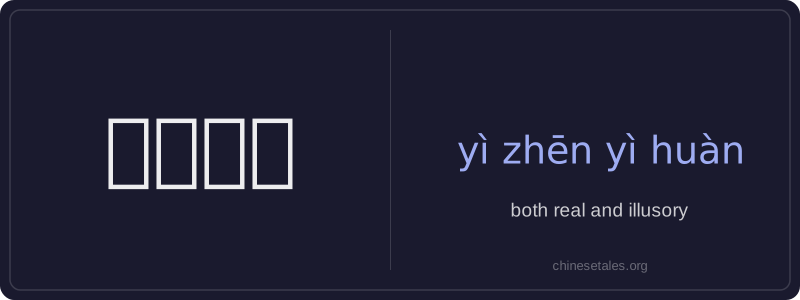
‘亦真亦幻’ (yì zhēn yì huàn) is a literary, four-character idiom meaning 'both real and illusory'—describing something that blurs the boundary between reality and illusion, truth and fantasy. The structure repeats the conjunction ‘亦’ (also, likewise), paired with ‘真’ (true, real) and ‘幻’ (illusory, unreal), creating a balanced, rhythmic contrast. It conveys ambiguity, dreamlike uncertainty, or poetic ambiguity—not mere confusion, but an evocative coexistence of two opposing qualities.
This phrase is commonly used in descriptive writing about art, dreams, memories, or natural scenery that feels uncanny or surreal: mist-shrouded mountains, nostalgic recollections, immersive VR experiences, or haunting music. It carries a refined, slightly melancholic or philosophical tone and appears frequently in poetry, film criticism, and literary prose—not in casual speech or technical contexts.
Example Sentences
Related Words
国语
‘Guó yǔ’ literally means 'national language'—
无论谁
‘无论谁’ (wú lùn shéi) is a pronoun meaning
不对
不对 (bù duì) literally combines 不 (bù), meani
外语
‘外语’ literally means ‘outside language’ —
违规
违规 (wéi guī) literally means 'to violate rules
亲笔
‘亲笔’ literally means ‘one’s own hand’—comb
我的
我的 (wǒ de) is a possessive pronoun meaning 'my'
面条
‘面条’ (miàn tiáo) literally means ‘flour str