Word Explanation
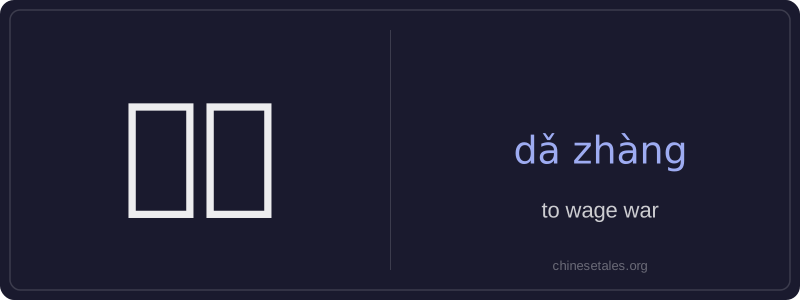
‘打仗’ literally combines 打 (dǎ, 'to strike' or 'to do') and 仗 (zhàng, 'battle' or 'military engagement'). Together, it means 'to wage war' or 'to fight in a war'—referring specifically to armed conflict between armies or nations. It is a colloquial yet standard verb used in both historical narratives and modern discussions of warfare.
This term emphasizes the active, organized nature of combat—not personal fights (which use 打架) or abstract conflict (e.g., 斗争). It commonly appears in past-tense contexts (e.g., 打过仗), passive constructions (e.g., 被迫打仗), or with time/duration modifiers (e.g., 长期打仗). While neutral in register, it carries gravity and is rarely used lightly or humorously.
Example Sentences
Related Words
国语
‘Guó yǔ’ literally means 'national language'—
无论谁
‘无论谁’ (wú lùn shéi) is a pronoun meaning
外语
‘外语’ literally means ‘outside language’ —
不对
不对 (bù duì) literally combines 不 (bù), meani
违规
违规 (wéi guī) literally means 'to violate rules
亲笔
‘亲笔’ literally means ‘one’s own hand’—comb
我的
我的 (wǒ de) is a possessive pronoun meaning 'my'
面条
‘面条’ (miàn tiáo) literally means ‘flour str