Word Explanation
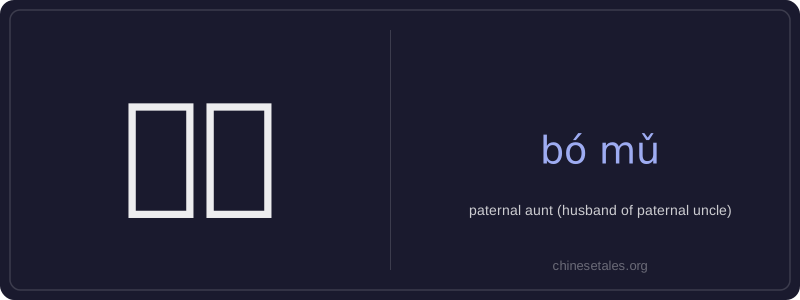
‘Bó mǔ’ refers specifically to the wife of one’s paternal uncle — that is, the sister-in-law of one’s father. The first character ‘bó’ means ‘eldest paternal uncle’ (the elder brother of one’s father), and ‘mǔ’ means ‘mother’, but here it functions as a respectful title for an older female relative by marriage, not a biological mother. Together, ‘bó mǔ’ forms a kinship term indicating both family position and social respect.
This term is used in formal or polite speech when addressing or referring to this relative, especially in traditional or extended-family settings. It reflects Chinese cultural emphasis on precise familial roles and hierarchical respect. Unlike English, which often uses generic terms like ‘aunt’, Mandarin distinguishes between maternal and paternal aunts, and further differentiates by marital status and birth order. ‘Bó mǔ’ is never used for maternal relatives or for younger uncles’ wives — those have distinct terms like ‘shū mǔ’ or ‘gū mǔ’.
Example Sentences
Related Words
国语
‘Guó yǔ’ literally means 'national language'—
无论谁
‘无论谁’ (wú lùn shéi) is a pronoun meaning
外语
‘外语’ literally means ‘outside language’ —
不对
不对 (bù duì) literally combines 不 (bù), meani
违规
违规 (wéi guī) literally means 'to violate rules
亲笔
‘亲笔’ literally means ‘one’s own hand’—comb
我的
我的 (wǒ de) is a possessive pronoun meaning 'my'
面条
‘面条’ (miàn tiáo) literally means ‘flour str