Word Explanation
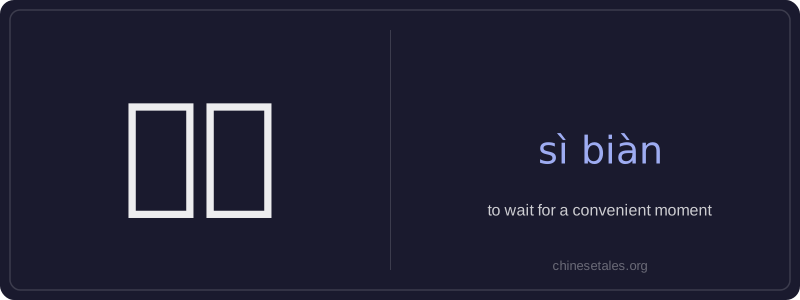
‘伺便’ is a formal, literary verb meaning 'to wait for a convenient or opportune moment'—often to speak with someone, act discreetly, or seize an opening without causing disruption. The first character 伺 (sì) means 'to watch closely, to wait attentively', while 便 (biàn) means 'convenience, opportunity, or suitability'. Together, they convey the idea of observing and patiently awaiting the right time or circumstance.
This term is commonly used in written Chinese and formal spoken contexts—such as business meetings, official communications, or polite social interactions—where timing and tact are valued. It implies restraint, awareness, and respect for others’ schedules or emotional readiness. While not archaic, it’s more refined than everyday alternatives like 找机会 (zhǎo jīhuì, 'to look for an opportunity') and rarely appears in casual conversation among young people or in informal digital communication.
Example Sentences
Related Words
国语
‘Guó yǔ’ literally means 'national language'—
无论谁
‘无论谁’ (wú lùn shéi) is a pronoun meaning
外语
‘外语’ literally means ‘outside language’ —
不对
不对 (bù duì) literally combines 不 (bù), meani
违规
违规 (wéi guī) literally means 'to violate rules
亲笔
‘亲笔’ literally means ‘one’s own hand’—comb
我的
我的 (wǒ de) is a possessive pronoun meaning 'my'
面条
‘面条’ (miàn tiáo) literally means ‘flour str