Word Explanation
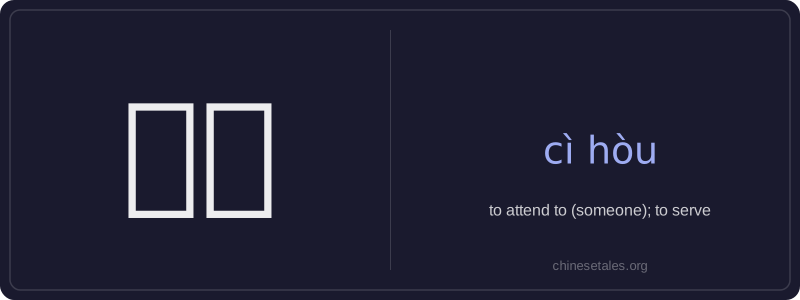
'伺候' (cì hòu) is a verb meaning to attend to or serve someone, especially in a respectful, dutiful, or subservient manner. The first character 伺 (cì) originally means 'to wait for an opportunity' or 'to watch closely', while 候 (hòu) means 'to wait' or 'to greet respectfully'. Together, they convey the idea of attentively waiting on someone’s needs—often implying care, deference, and readiness to respond immediately. It's commonly used in contexts involving service to elders, superiors, or guests, and carries subtle connotations of hierarchy and propriety.
This word appears frequently in historical dramas and classical literature, but remains in modern use—especially in family or formal service settings. While neutral in grammar, it often implies a power or status difference: the person being 伺候'd is typically older, higher-ranking, or more esteemed. It's rarely used for peers or casual situations, and never for inanimate objects or animals—unlike English 'serve', which is broader.
Example Sentences
Related Words
国语
‘Guó yǔ’ literally means 'national language'—
无论谁
‘无论谁’ (wú lùn shéi) is a pronoun meaning
外语
‘外语’ literally means ‘outside language’ —
不对
不对 (bù duì) literally combines 不 (bù), meani
违规
违规 (wéi guī) literally means 'to violate rules
亲笔
‘亲笔’ literally means ‘one’s own hand’—comb
我的
我的 (wǒ de) is a possessive pronoun meaning 'my'
面条
‘面条’ (miàn tiáo) literally means ‘flour str