Word Explanation
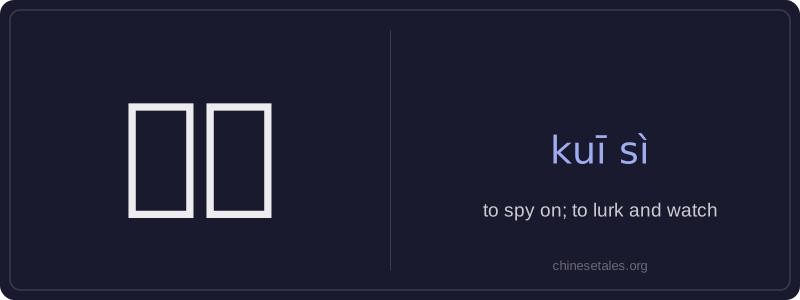
‘窥伺’ is a compound verb meaning to spy on or lurk and watch stealthily, often with intent to take advantage or seize an opportunity. The first character 窥 (kuī) means 'to peek' or 'to secretly observe', evoking the image of someone peering from concealment. The second character 伺 (sì) means 'to wait for' or 'to lie in wait', suggesting patient, opportunistic observation. Together, they emphasize both the act of covert watching and the underlying motive—such as predation, surveillance, or strategic timing.
This word carries a distinctly negative or wary connotation and appears frequently in literary, journalistic, or descriptive contexts—especially when portraying predators stalking prey, spies gathering intelligence, or rivals monitoring each other’s moves. It is rarely used in casual speech and tends to appear in formal writing or vivid narrative descriptions where tension or threat is implied.
Example Sentences
Related Words
国语
‘Guó yǔ’ literally means 'national language'—
无论谁
‘无论谁’ (wú lùn shéi) is a pronoun meaning
外语
‘外语’ literally means ‘outside language’ —
不对
不对 (bù duì) literally combines 不 (bù), meani
违规
违规 (wéi guī) literally means 'to violate rules
亲笔
‘亲笔’ literally means ‘one’s own hand’—comb
我的
我的 (wǒ de) is a possessive pronoun meaning 'my'
面条
‘面条’ (miàn tiáo) literally means ‘flour str