Word Explanation
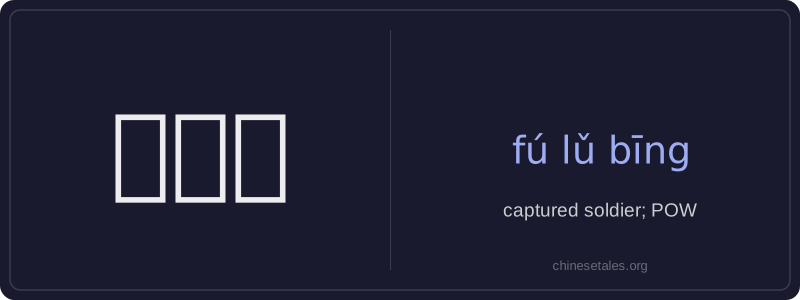
‘俘虏兵’ literally combines three characters: 俘 (fú, 'to capture'), 虏 (lǔ, archaic or literary synonym for 'captive' or 'to seize'), and 兵 (bīng, 'soldier'). Together, the term means 'captured soldier'—a soldier taken prisoner during armed conflict. It is a formal, historically grounded noun commonly found in historical narratives, military reports, memoirs, and wartime literature.
Unlike the more neutral modern term 战俘 (zhàn fú, 'POW'), 俘虏兵 carries subtle connotations of status and role: it often implies a captured enemy soldier who may be interrogated, detained, or even recruited by the capturing side. The word appears frequently in accounts of 20th-century Chinese conflicts (e.g., the War of Resistance Against Japan or the Chinese Civil War), where treatment and reintegration of such soldiers were strategically significant.
Example Sentences
Related Words
国语
‘Guó yǔ’ literally means 'national language'—
无论谁
‘无论谁’ (wú lùn shéi) is a pronoun meaning
外语
‘外语’ literally means ‘outside language’ —
不对
不对 (bù duì) literally combines 不 (bù), meani
违规
违规 (wéi guī) literally means 'to violate rules
亲笔
‘亲笔’ literally means ‘one’s own hand’—comb
我的
我的 (wǒ de) is a possessive pronoun meaning 'my'
面条
‘面条’ (miàn tiáo) literally means ‘flour str