Word Explanation
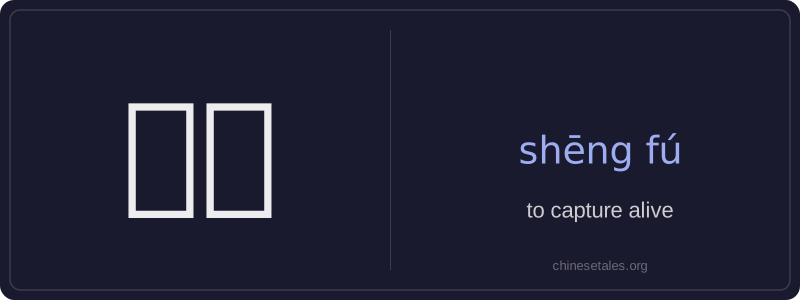
'Shēng fú' literally means 'alive capture' — it combines 生 (shēng), meaning 'alive' or 'living', and 俘 (fú), meaning 'to capture' or 'to take prisoner'. Together, they form a formal, literary verb meaning 'to capture alive', emphasizing that the captured person or animal is unharmed and held in custody. It is commonly used in military, historical, journalistic, or wildlife conservation contexts — for example, when describing soldiers taking enemy combatants prisoner without killing them, or rangers capturing endangered animals for relocation or medical treatment.
Unlike the more general 逮捕 (dài bǔ, 'to arrest') or 抓 (zhuā, 'to catch'), 生俘 stresses the intentional preservation of life during capture. It carries a connotation of control, restraint, and purposeful non-lethality. The term is rarely used in casual speech and appears most often in written reports, news headlines, documentaries, or official statements where precision about the condition of the captured subject matters.
Example Sentences
Related Words
国语
‘Guó yǔ’ literally means 'national language'—
无论谁
‘无论谁’ (wú lùn shéi) is a pronoun meaning
外语
‘外语’ literally means ‘outside language’ —
不对
不对 (bù duì) literally combines 不 (bù), meani
违规
违规 (wéi guī) literally means 'to violate rules
亲笔
‘亲笔’ literally means ‘one’s own hand’—comb
我的
我的 (wǒ de) is a possessive pronoun meaning 'my'
面条
‘面条’ (miàn tiáo) literally means ‘flour str