Word Explanation
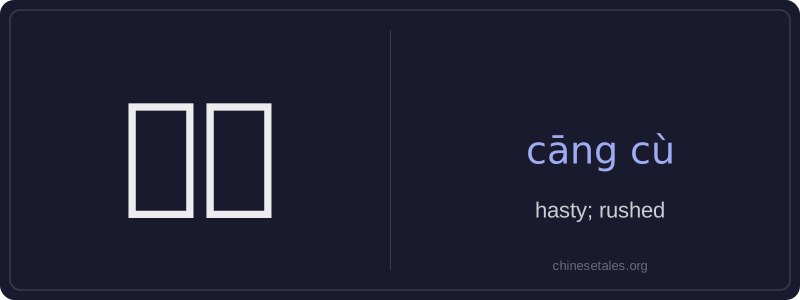
仓促 (cāng cù) is an adjective meaning 'hasty' or 'rushed'—describing actions, decisions, or preparations made hastily, often without sufficient time, thought, or preparation. The character 仓 (cāng) originally relates to a granary but in this compound evokes urgency and disorder (as in 仓皇, cāng huáng, 'flustered'); 促 (cù) means 'to urge' or 'to hasten', reinforcing the sense of pressure and speed. Together, they form a literary yet commonly used term that conveys a lack of calm deliberation.
This word is frequently used in formal writing, news reports, and spoken Mandarin when criticizing or describing poorly planned efforts—such as rushed policy implementation, impromptu speeches, or last-minute exam cramming. It carries a slightly negative connotation, implying inefficiency or potential error due to insufficient time. While it can modify nouns directly (e.g., 仓促的决定), it’s also common after verbs like 做出 (to make) or 进行 (to carry out) to describe how an action unfolded.
Example Sentences
Related Words
国语
‘Guó yǔ’ literally means 'national language'—
无论谁
‘无论谁’ (wú lùn shéi) is a pronoun meaning
外语
‘外语’ literally means ‘outside language’ —
不对
不对 (bù duì) literally combines 不 (bù), meani
违规
违规 (wéi guī) literally means 'to violate rules
亲笔
‘亲笔’ literally means ‘one’s own hand’—comb
我的
我的 (wǒ de) is a possessive pronoun meaning 'my'
面条
‘面条’ (miàn tiáo) literally means ‘flour str