Word Explanation
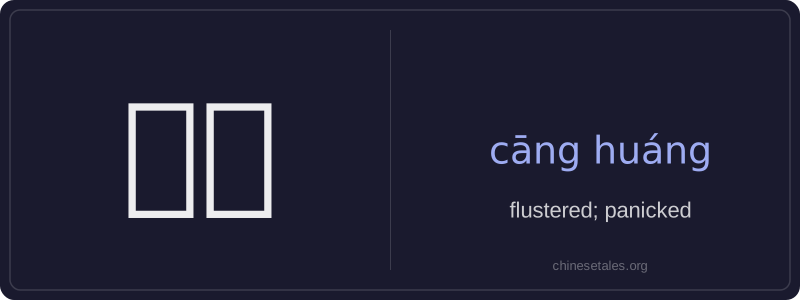
‘仓皇’ is an adjective describing a state of sudden, disordered panic—like someone fleeing without thinking, dropping things, or speaking incoherently under pressure. Though it looks like two separate characters, 仓 and 皇, the word functions only as a fixed, inseparable compound; neither character carries this meaning alone. Historically, 仓 suggests haste (as in 仓促 cāngcù, 'hurried'), and 皇 evokes agitation or fluster (as in 皇皇 huánghuáng, 'anxious, restless'), but together they form a literary, slightly formal term for visible, chaotic distress.
It’s commonly used to depict physical reactions to fear or urgency: stumbling, shouting, abandoning belongings, or making rash decisions. You’ll find it in narratives, news reports, and formal writing—but rarely in casual speech. It often modifies verbs (e.g., 仓皇逃走) or appears with adverbs like ‘十分’ or ‘神色’. Unlike colloquial terms like 慌张 (huāngzhāng), 仓皇 carries stronger connotations of loss of control and dramatic urgency.
Example Sentences
Related Words
国语
‘Guó yǔ’ literally means 'national language'—
无论谁
‘无论谁’ (wú lùn shéi) is a pronoun meaning
外语
‘外语’ literally means ‘outside language’ —
不对
不对 (bù duì) literally combines 不 (bù), meani
违规
违规 (wéi guī) literally means 'to violate rules
亲笔
‘亲笔’ literally means ‘one’s own hand’—comb
我的
我的 (wǒ de) is a possessive pronoun meaning 'my'
面条
‘面条’ (miàn tiáo) literally means ‘flour str