Word Explanation
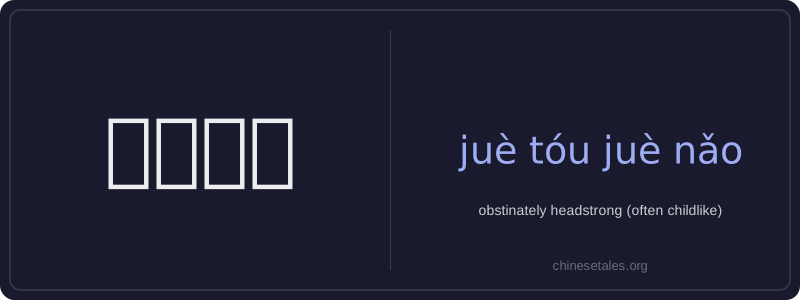
'Juè tóu juè nǎo' is a reduplicative, four-character adjective describing someone—typically a child or young person—who is stubbornly headstrong in a way that’s endearing or childish rather than malicious. The repetition of 倔 (juè, 'obstinate') emphasizes the intensity of the trait, while 头 (tóu, 'head') and 脑 (nǎo, 'brain') metaphorically point to the source of this willfulness—thinking and acting with inflexible determination, often without considering consequences or others’ advice.
This term carries a gentle, affectionate tone; it’s rarely used critically for adults and almost never for serious defiance. It appears frequently in family contexts, storytelling, or light-hearted criticism—e.g., when a toddler refuses to wear shoes or a teenager insists on choosing their own clothes despite parental suggestions. It evokes innocence and immaturity more than arrogance or rebellion.
Example Sentences
Related Words
国语
‘Guó yǔ’ literally means 'national language'—
无论谁
‘无论谁’ (wú lùn shéi) is a pronoun meaning
外语
‘外语’ literally means ‘outside language’ —
不对
不对 (bù duì) literally combines 不 (bù), meani
违规
违规 (wéi guī) literally means 'to violate rules
亲笔
‘亲笔’ literally means ‘one’s own hand’—comb
我的
我的 (wǒ de) is a possessive pronoun meaning 'my'
面条
‘面条’ (miàn tiáo) literally means ‘flour str