Word Explanation
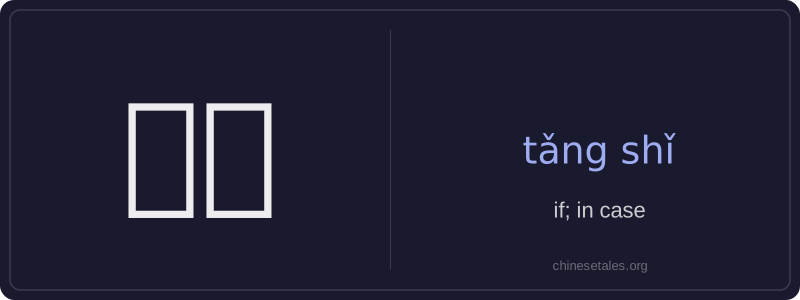
倘使 is a formal conjunction meaning 'if' or 'in case', used to introduce hypothetical or conditional clauses. Though composed of two characters—倘 (tǎng), which historically means 'if' or 'suppose', and 使 (shǐ), which usually means 'to cause' or 'to make'—together they function as a fixed literary expression, not a literal combination. It carries a classical or written register and appears frequently in essays, formal speeches, and older texts, but is rare in casual spoken Chinese.
This word signals uncertainty or contingency, similar to the English 'were it the case that' or 'should it happen that'. It often introduces situations that are imagined, unlikely, or dependent on unstated conditions. Because of its elevated tone, 倘使 is typically avoided in everyday conversation in favor of more common alternatives like 如果 or 要是. Its use adds rhetorical weight and solemnity to a statement, especially when expressing concern, caution, or polite speculation.
Example Sentences
Related Words
国语
‘Guó yǔ’ literally means 'national language'—
无论谁
‘无论谁’ (wú lùn shéi) is a pronoun meaning
外语
‘外语’ literally means ‘outside language’ —
不对
不对 (bù duì) literally combines 不 (bù), meani
违规
违规 (wéi guī) literally means 'to violate rules
亲笔
‘亲笔’ literally means ‘one’s own hand’—comb
我的
我的 (wǒ de) is a possessive pronoun meaning 'my'
面条
‘面条’ (miàn tiáo) literally means ‘flour str