Word Explanation
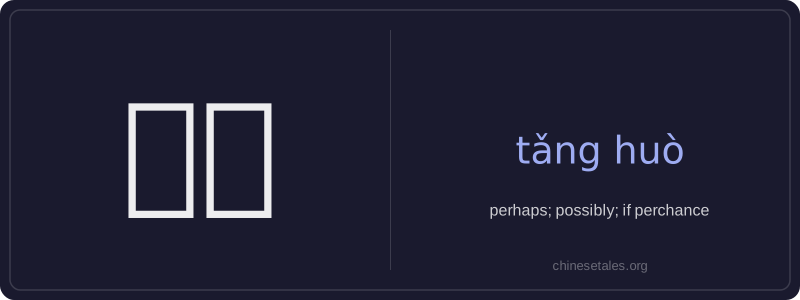
倘或 is a formal or literary conjunction meaning 'perhaps', 'possibly', or 'if perchance'. Though composed of two characters—倘 (tǎng), meaning 'if' or 'supposing', and 或 (huò), meaning 'or' or 'perhaps'—together they function as a single unit expressing hypothetical possibility. It conveys uncertainty with a gentle, somewhat cautious or tentative tone, often implying mild concern or polite speculation.
This word appears most frequently in written Chinese—such as classical texts, formal essays, or literary dialogue—and is rarely used in everyday spoken Mandarin. It’s commonly followed by a clause describing a possible outcome or condition (e.g., 倘或下雨, 就取消活动). Its register is elevated, so learners should avoid using it in casual conversation where words like 也许 or 如果 would sound more natural and appropriate.
Example Sentences
Related Words
国语
‘Guó yǔ’ literally means 'national language'—
无论谁
‘无论谁’ (wú lùn shéi) is a pronoun meaning
外语
‘外语’ literally means ‘outside language’ —
不对
不对 (bù duì) literally combines 不 (bù), meani
违规
违规 (wéi guī) literally means 'to violate rules
亲笔
‘亲笔’ literally means ‘one’s own hand’—comb
我的
我的 (wǒ de) is a possessive pronoun meaning 'my'
面条
‘面条’ (miàn tiáo) literally means ‘flour str