Word Explanation
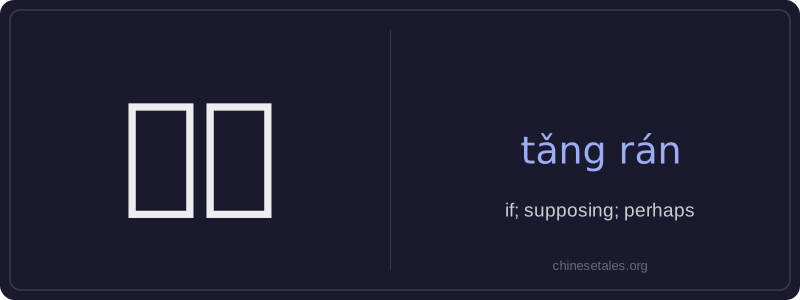
倘然 is a formal or literary conjunction meaning 'if', 'supposing that', or 'perhaps'—it introduces a hypothetical condition. Though composed of two characters (倘 and 然), it functions as a single unit; 倘 itself means 'if' or 'supposing', while 然 (here meaning 'thus' or 'so') reinforces the conditional sense, giving the compound a slightly archaic or refined tone. It is rarely used in casual speech but appears in written Chinese, classical-style prose, formal essays, and occasionally in elevated spoken contexts like speeches or news commentary.
Unlike everyday alternatives like 如果 or 要是, 倘然 carries a subtle nuance of polite hesitation or gentle speculation—less blunt, more contemplative. It often implies the speaker is considering a possibility without asserting its likelihood, making it suitable for diplomatic, reflective, or narrative writing. Because of its literary flavor, learners should recognize it in reading but use more common conjunctions in daily conversation.
Example Sentences
Related Words
国语
‘Guó yǔ’ literally means 'national language'—
无论谁
‘无论谁’ (wú lùn shéi) is a pronoun meaning
外语
‘外语’ literally means ‘outside language’ —
不对
不对 (bù duì) literally combines 不 (bù), meani
违规
违规 (wéi guī) literally means 'to violate rules
亲笔
‘亲笔’ literally means ‘one’s own hand’—comb
我的
我的 (wǒ de) is a possessive pronoun meaning 'my'
面条
‘面条’ (miàn tiáo) literally means ‘flour str