Word Explanation
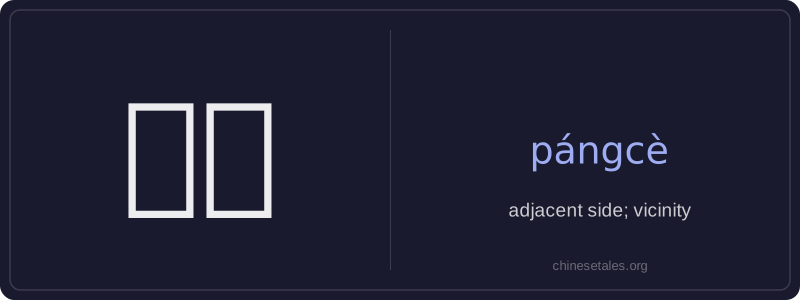
旁侧 literally combines 旁 (páng), meaning 'side' or 'beside', and 侧 (cè), meaning 'side' or 'flank'. Together, they form a formal, slightly literary noun meaning 'adjacent side' or 'vicinity' — emphasizing the area immediately next to or beside something. It conveys spatial proximity without specifying direction (unlike left/right or front/back) and often implies closeness in physical space, especially in descriptive or written contexts.
This term is commonly used in geography, architecture, urban planning, and narrative description — for example, when referring to areas adjacent to landmarks, roads, or natural features. While grammatically a noun, 旁侧 functions like a locative noun and typically appears after prepositions like 在 (zài) or with measure words like 一旁 (yī páng). It’s more formal than everyday alternatives like 旁边 (pángbiān) and rarely appears in casual speech.
Example Sentences
Related Words
国语
‘Guó yǔ’ literally means 'national language'—
无论谁
‘无论谁’ (wú lùn shéi) is a pronoun meaning
外语
‘外语’ literally means ‘outside language’ —
不对
不对 (bù duì) literally combines 不 (bù), meani
违规
违规 (wéi guī) literally means 'to violate rules
亲笔
‘亲笔’ literally means ‘one’s own hand’—comb
我的
我的 (wǒ de) is a possessive pronoun meaning 'my'
面条
‘面条’ (miàn tiáo) literally means ‘flour str